All That God Talk

Once you let Jesus in your kitchen, he just keeps on making peanut butter and banana sandwiches and he never leaves. ” Cathleen Falsani from Sin Boldly (24)

A lot of “God-talk” makes me cringe. That might seem strange coming from someone who spent almost four decades in ministry. While I am more comfortable now that I was all those decades ago, my shyness and sometimes downright distaste for chattering about Jesus like he is my best friend has never completely left me. I particularly abhor public pronunciations on social media and the news channels. I know I might sound judgmental and self-righteous but I give myself and everyone else who expresses similar sentiments a pass. Having given this topic a fair amount of thought, I paradoxically hold no resentment to those who can and do talk about Jesus like he is in the kitchen making sandwiches. That is, if actions bear authentic witness.

So many people today are perplexed by the incessant, ubiquitous talk in the news that blends religion and politics. Everyone seems to have a LOT to say about God these days, as if they have a direct iPhone connection, producing elation in some, repugnance in others, and incredulity in most. Increasingly, folks seek out spiritual direction and want to talk to me about their deep seeded feelings on all sides of the spectrum. I welcome these conversations. Religious nationalism is on the rise, no doubt about it, confusing even the most faithful among us. Finding the balance and discerning a pathway through the quagmire of social and mass media is best done with a trusted friend and guide. I am happy to provide a sacred space for this dialogue because truth be told, I need discernment too and find wisdom in between the crooked lines.

I encourage others to be gentle with themselves and others when conflicts arise over basic religious values and whether or not the Ten Commandments should be placed in public schools. Everyone struggles, especially when friends do not agree. So why argue about bibles, monuments, and how Christian/Catholic someone appears? Why condemn the motivations of believers right and left? The love we have for each other must always come first. Why not start with empathetic understanding and actions? How can we teach the compassion, mercy, and forgiveness of Jesus if we are not empathetic, compassionate, merciful and forgiving?

What it all comes down to is something my mother used to harp on when I was a kid. “Talk is cheap. Show me.” Dad put it more bluntly: “Put your money where you mouth is.” In other words, as most of us know, it’s far easier to talk about Jesus than to practice what he preached. Amen to that. It’s far easier to tell other people what I THINK Jesus wants them to believe, say, and do, than to spend time discerning what his words might mean for MY life right now, today, in July of 2024.

Whether or not we bring God-talk into the conversation (and let’s not forget how we also abuse sacred names with our foul language), actions do speak louder than words. Making a peanut butter and banana sandwich in your kitchen for someone hungering for more than physical nourishment might better smooth the rough patches than taking a political stand. A compassionate look, a comforting hug, a gentle hand, all speak in tacit, nonverbal ways about Jesus’ teachings far more than rants on social media. Building interpersonal trust through listening without judgment may allow the Christ in us to arise, like incense, perfuming the air with invisible Presence. Through authentic encounters, interpersonal relationships may seed and blossom again. No words necessary.

Reading: A Spiritual Practice

I drove to the harbor recently to meet some friends and when I turned into the parking lot was surprised to see the presence of attendants perched on high deck chairs underneath umbrellas. Dana Point Harbor is currently under construction and I suppose changes inevitable. Neither of the young men made eye contact since both were gazing at what I presumed were phones. Upon closer observation, I noticed one of them was reading an honest-to-goodness REAL book! I stifled an urge to interrupt his reverie to ask what he was reading. I imagined Two Years Before the Mast or maybe Moby Dick (the romantic side of my personality fitting the setting to an apropos classic).

My day brightens when I see people reading outside, lost in faraway worlds, characters, and circumstances. To me, reading is a spiritual practice, good for the body, mind, and soul. Besides transporting us out of our provincial habitats and making us rest, reading opens the doors of empathy, compassion, and social justice. The inner life richly evolves from trivial puddles of worries into vast rivers of wisdom. And all for free, if we intentionally set aside time for this holy leisure. Aye, there’s the rub for most people. Making time.

Summer traditionally holds the promise of slowly down, maybe sitting on the beach, in the backyard, or on a train or plane, reading. Lists of popular books abound on podcasts and newspapers, but sifting through recommendations takes time. Since last summer, I have read over one hundred books, some new titles, some older. Here are a few of my current favorites with some quick reviews to pique your interests.

Brooklyn and Long Island (the new sequel) or any novel by Colm Toibin. Perhaps you saw the movie, also called Brooklyn? The ups and downs of an innocent Irish lass who comes to America and marries into a huge Italian family covers the themes of homesickness, assimilation, loyalty, love and betrayal.

March (a Pulitzer Prize winner) by Geraldine Brooks. The mostly absent character, Father March, of Alcott’s Little Women (husband of Marmee) comes to life as he joins the Union Army during the Civil War, changing his family and the principles he holds dear. I also recommend Year of Wonders (same author) about how people cope with the plague in 17th century. Parallels to the pandemic of 2020 are fascinating.

The Good Lord Bird by James McBride, a fictionalized version of John Brown, the civil rights Christian zealot who organized the siege of Harper’s Ferry in high-speed technicolor! Simultaneously entertaining and insightful. McBride is a master of unusual characters, quirky settings, and sparkling dialog that will make you laugh out loud and then weep. I also loved The Heaven and Earth Grocery Store about a dilapidated community called Chicken Hill, Pennsylvania. Many stories overlap as a mystery from the past is revealed.

September, The Shell Seekers, Winter Solstice, Coming Home by Rosemond Pilchur. This author has been around forever but I just discovered her this past year. Beautiful settings in the UK, all pure escapism and enjoyment, lovely sentiments. Picture these books as carefully crafted series with many episodes on PBS’ “Masterpiece.”

The Covenant of Water by Abraham Verghese. This book is epic with complicated plot lines and fascinating characters. The fear of water seeps into the cracks of the lives of seemingly unrelated circumstances. Do not be afraid of its length. Hang in there. It’s worth it.

Tom Lake by Ann Patchett (one of my favorite authors). A family quarantines together during the pandemic on a cherry farm in Michigan. Mom reluctantly reveals a surprising story of her past. Listen to Meryl Streep read the audiobook for a real treat.

Mornings in Jennin by Susan Abulhawa. Shattering, enlightening, insightful, heart-breaking, unforgettable. The trials of a Palestinian family driven out of their land from 1948 to the present. This personal story helps navigate the current headlines on the Israeli/Palestinian conflict. I would love to discuss this one!

The Berry Pickers by Amanda Peters. A heart-wrenching and beautifully written mystery about what happens when a four-year-old Inuit girl goes missing from the blueberry fields of Maine. Haunting and riveting.

Here are a few nonfiction notables:

Spirit Wheel by Stephen Charleston. Prayers from a Native American wisdom elder. Sit outside and read these prayers slowly. They will feed your soul.

A Prayer Journal by Flannery O’Connor. Another side of this famous author is revealed. Now the subject of a new film produced by Ethan Hawkes.

Sacred Earth, Sacred Soul by John Philip Newell. Celtic spirituality at its best.

The Book of Nature by Barbara Mahany. I wrote about this one a previous blog. Pure heaven.

The Love of Thousands by Christine Valters Paintner. You will never think about the Communion of Saints in the same way. Steller.

While the sun burns off the marine layer, I feel the Spirit beckoning me to the spiritual practice that changes lives for the better and graces everyone. I invite you to open a book and join with me and thousands of others as we change the world through reading!

Something Historical

“It’s always something!” lamented the Saturday Night Live character Roseanne Roseannadanna, hilariously played by Gilda Radner many years ago. Her frustrated yell at the camera always made me laugh because it rang so true! Thankfully, in my case, that “something” often beckoned me to cross thresholds into wonderous adventures.

For the past five weeks, as the guide for WRITE THAT DOWN, a workshop in the Art of Creative Journal Writing, events of world history (both past and present) have dominated my awareness. Focusing on the theme “Something Historical,” we met once a week for two hours at the Dana Point Historical Society Museum surrounded by numerous black and white photographs, city blueprints, maritime memorabilia, replicas of sailing ships, and so much more. We plotted personal timelines, pondered coinciding global events, wrote freely, and shared deeply. What an incredible experience to gaze at ourselves as citizens of the world, occupying a place in history while simultaneously living day to day, working, and raising families.

I firmly believe that timelines (everyone’s timeline, not just the famous), contain important insights into personal growth and communal understanding. How do timelines cross and effect personal stories?  How have world events shaped how we think and feel? What meaningful lessons have we learned from history? These are just a few of the questions raised.

There is so much talk today about letting go of the past, not wasting time worrying about the future, and simply living in the present moment with mindfulness. Sounds good but how do we actually do that?  Such a pursuit remains elusive, largely because we carry the past with us into the present and we cannot help but make a plan for the future. Caught on the “carousel of time” we need to sit down once in a while, sift through personal history, and write down the memorable events, influential teachers, and pivotal moments of enlightenment that have made us unique. Such a practice constitutes the very essence of the spiritual life.

Long ago, Thoreau wrote that most of us “lead lives of quiet desperation,” a quote etched on my memory when I was in my impressionable twenties. “Ugh! Not me!” I declared, and set sail on a serious quest for meaning. (Still on that ship). Despite fleeting moments of desperation, anxiety written on countless faces (including my own), I still believe in following the impossible dream and holding the banner of hope high. History teaches us that we are resilient survivalists, capable of adapting to the shifting demands of climate and culture, however devastating some events turned out to be. We possess ingenuity, along with the ability to rise again and again to face the dilemmas and challenges of the modern age we inhabit. We also ride on an infinite river of love and grace which some of us call “God.”

Even though I may succumb to worry about the world my grandchildren will inherit and long for the old days when life seemed more innocent (it never was), I remind myself that all past elders shared that same fear of the future—what devastating effects the invention of automobiles, the telephone, radio, television, etc., would do to life. Yet, here we are, using the tools of modernity while continuing to invent new ones. Yes, the rate of invention is rather alarming to us old timers but not so to the young, digital natives. They, too, shall rise to the occasion and find meaning if we encourage them to reflect on their own timelines, learn from the past, and make way for the astounding and illuminating “something” the future holds.

Believe What You Love

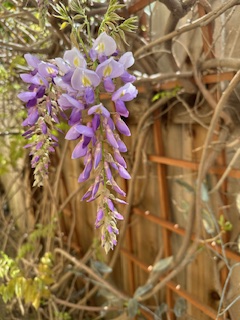
Wisteria is blooming outside my kitchen window again. The delicate, light purple blossoms and mint green leaves suddenly appear each year as if out of nowhere, perfuming the air and immediately uplifting my soul. How I love these signals of transcendence!  They ignite the embers stirring deep within and connect me instantly with the Sacred Presence that forever dwells at the ground of all being.

Especially during Spring, finding God in everything, everything in God provides a rich banquet of sights, sounds, smells, savors, and stimulations. Allowing the imagination to run wild, there are endless delightful ways to encounter and experience the Divine in natural settings. Yet these insights sometimes startle people. Someone once told me that such an approach is “too easy, too good to be true.” Others question my orthodoxy and warn against pantheism, worried about my faith and ultimate salvation. I get that. Most religious people find great comfort in strict adherence to creeds, and what they deem “right belief.” They feel compelled to correct anyone who waxes poetic about encountering God in wisteria.

But I know I am in good company. Many great saints believed and lived an incarnational faith: Francis of Assisi, Julian of Norwich, Ignatius of Loyola, and Hildegard of Bingen, to name a few.   To them, and many others, we live in a Christ-soaked universe; we float on a river of divine love; we walk on sacred ground right where we are. Defined more precisely as “panentheism,” this approach provides an expansive view of faith that includes the enlightenment of both Scripture and Tradition.

Professor and author John Caputo writes eloquently about this vision in his many books on philosophy and religion. He proposes that we try to “believe what we love,” rather than “love what we believe.”  While his challenge may resonate on a primordial level, what does he mean exactly and why do so many hesitate embracing such an approach?

Cognitive dissonance rises from our need for concrete reassurances about the Divine rather than “mere” symbols and metaphors from the natural world. Yet, when we try to put skin on God, symbols and metaphors (including words, the arts, and natural wonders) comprise the only tools we possess. And they are very powerful! Who among us has not been profoundly moved by a magnificent piece of music or literature? A rainbow? Moonlight shimmering over the ocean? Why then do we often say “it’s just a symbol”? As long as we remember that the symbol only points to the real thing, and is not the thing itself, we can believe in what we love without worry.

As I gaze at the blossoming wisteria each day, my thoughts again return to the Paschal (Easter) mystery: Life-Death-Resurrection-Ascension-Pentecost. No matter how down and out life seems at the moment, we will rise again and soon will ascend into the clouds. Before we know it, warm summer breezes will carry us on Spirit’s wings to new fullness. Then the cycle repeats, on display through every season of life, until the end of time. Belief in the Paschal Mystery, the foundation of my faith, is not simply an intellectual exercise, nor an emotional high, but a practice that changes ordinary moments into sweet-smelling, purple miracles right outside my window.

Leaning Into Lent

The old song “Lean On Me,” originally sung by Bill Withers, so full of goodwill, strong arms, and resilient friendship, has been an important part of my Lenten practice this year. Sometimes I imagine I am singing the message to the world and sometimes I imagine that the Holy One is singing it to me, depending on my mood. Either way, the song comforts and sustains, like a soothing meditative prayer. I play it once a day at full volume (or on headphones) as a positive reminder of the true presence of Christ within myself and others. (Don’t knock it until you try it!)

Lately, when I am singing along, images of John the Beloved, leaning on Jesus at the Last Supper, call me into a new consciousness. Artists have painted their visions of this scene for centuries (just check them out on Google Images). In some renderings, John, with his head on the chest of Jesus, seems to be listening to his very heartbeat. In other paintings, with arms around the neck of his friend, John looks worried, sad, or pleading, and Jesus gently reassuring and resolute. They are both aware that the physical bond between them is about to be broken, which intensifies the emotion in these works of art.

In some sense, as Jesus and John face separation, the stages of grief have already begun, sort of like being in hospice or keeping vigil over someone on death’s threshold. Yet, as they lean on each other, they are united in facing the agony and ecstasy of the Passion, the portending doom thus bearable. Eventually, at the end of the story, John stands at the foot of the cross, leaning on Mary, the Mother of Jesus, and she leans on him. That powerful scene alone carries a multitude of emotions and lessons.

Who do you identify most in these images? Truth be told, I feel more comfortable being the person others lean on. (Oh no! Do I have the Messiah complex?) I am keenly aware that self-reliance still ranks high on my list of primary virtues. However, at this stage of life, I am learning how much leaning on others benefits all of us. So I am “leaning into Lent,” this year, my head on the heart of what it means to pray, fast, and sacrifice in a different, more gentle way.

Seems to me that at this particular time in history, we need these “leaning” images more than ever. Studies have shown that while we have never been more globally connected, we have also never felt so lonely. Perhaps changing the focus of Lent from self-improvement sacrifices (where I am the sole beneficiary) to altruistic caretaking could halt the down-ward spiral of loneliness. What if I leaned into the Christ within (my true self) and reached out with a capacious, generous spirit to strangers, acquaintances, friends, and intimates? What if, in my vulnerability, I humbly allowed others to help me, thus unlocking the Christ within them?

Following John the Beloved’s lead, this mutual leaning eventually may find us all at the foot of the cross, deep in sorrow and pain, but never alone. Together, having passed through suffering and death to resurrection, ascension, and a new Pentecost, we can face anything.

Valentines and Ashes

“I will give you a new heart and put a new spirit in you; I will remove from you your heart of stone and give you a heart of flesh.” Ezekiel 36:26

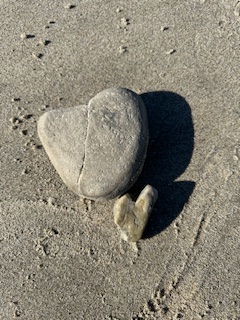
When life’s demands become too much, I take a walk on the beach. The waves ebb and flow, I breathe in the salty air, feel the warmth of the sun, and soon become mesmerized by the colorful palette of stones, pebbles, and boulders beneath my feet. Inevitably, I spot heart-shaped rocks hidden in plain sight. Big and small, some marked with stripes, some rough amalgamations, some resembling real flesh and blood, I call these “God’s Valentines.” I gather them up and lay them out on the sand like a boutique shopkeeper beckoning customers. Maybe oblivious beachcombers will stumble upon them in their meanderings and be uplifted! Stone hearts placed by a heart of flesh, in this case, from a stranger who cared.

Every year, right in the middle of February, we are invited to celebrate Valentine’s Day, unfortunately much hyped and commercial, focused on impossibly romantic declarations of love. Even so, I welcome the day as an invitation to express little acts kindness, especially to those who have long abandoned any possibility of romance. We all have such people in our lives–the elderly in nursing homes and hospitals; lonely shut-ins, the friends and relatives we rarely see; the list goes on.

Curiously this year, the Season of Lent begins on Valentine’s Day, much to the chagrin of those who plan to give up chocolate and alcohol. This may seem an incongruous juxtaposition of events to most, but in my mind, both days are all about love, which makes them more compatible than one might think. If we wean ourselves away from childish practices of austerity (like giving up candy) and graft ourselves onto the the tree of life (the cross), we may come to embrace a deeper understanding. Consider. for example, the historical roots of the season.

Lent was first observed as a forty-day retreat for catechumens (those who were preparing to be received into the Church on Easter). For sure, it was a time of scrutiny, a final purification of old destructive ways of living, but was also a time of excitement and joyful anticipation of personal redemption. Love of God, other people, of life, heightened and soared during Lent. If you have ever been on a life-altering retreat, multiply that bliss by a hundred! Having guided multitudes of seekers during Lent for over thirty years, I continually participated in and can personally witness to that unspeakable sea of joy. I always wished I could bottle and send it to everyone.

The Lenten season offers us a time for personal reflection and this year especially, I am alarmed that stony hearts seem to be the norm rather than the exception. The vilification on social media of anyone who steps out of line, says the wrong thing, or innocently makes an error of judgment has ramped up to an all time high. Even asking a question for clarification on the touchy subjects of politics and religion, for example, sets off a tirade of hateful comments across the cyber waves. Seems like true dialog, the art of civilized conversation, are dead in the water. Our stony hearts are getting stonier; we drastically need a new spirit to bring us compassionate hearts open to gentile listening again.

Since valentines and Lenten rituals entwine like grapevines in 2024, we are offered a unique opportunity to do something different, to make the six weeks of Lent a time to enlarge our hearts, to cultivate the art of living passionately and joyfully. Think about appreciating the smell of bonfires on the beach, the simplicity of solitary contemplative walks, finding surprises right underfoot; spending leisurely hours listening to music, having quality time with loved ones, becoming keenly aware of the river of atmospheric love flowing generously through the air we breathe.

Rather than giving up something for Lent, think about giving away something held dear, like the precious time it takes to hand write a letter, send a card, listen to a friend, make a delicious dinner, waste a whole day playing with children; or taking personal time for creative activities like journal writing, crafting, or exploring an art museum. Perhaps in doing so with intention, the Spirit and the Season of Lent can transform our stony hearts and make personal resurrection a real possibility when Easter rolls around. Valentines and ashes pave the way!

Old Dogs and New Tricks

A new year has dawned! I was so busy celebrating the Twelve Days of Christmas, I suspended my online presence to be in the present. Gathered in communities of young and old, the holidays were like a deep dive into a warm pool of love and gratitude. “The best ever!” I remarked when asked. “You always say that,” reminded my daughter with a winsome smile. I suppose I do.

Midst the parties and gatherings, New Year’s Day unfolded quietly at my house. Instead of making resolutions, I curled up in my favorite armchair under a fleece blanket and set upon choosing a theme to weave into the coming months. My mind wandered far and wide but within an hour, I knew: “Old Dogs and New Tricks.” Let me explain.

My almost eleven-year-old Golden Retriever has been ailing for the past six months and we have made many visits to the veterinarian. Addressing my concern, the charming young female vet reassured me that “old dog syndrome” is to be expected at this age. Yes, I knew that, having owned several other old dogs. However, her words hit my stomach like a dose of bitter medicine. Was she only talking about my pet or was I included in her diagnosis? At the beginning of a new year full of sunshine and promise, such dour thoughts were about as welcome as a wet weekend at the beach.

I had just spent three days and nights with my youngest grandchildren, still basking in the joy of being together, playing endless board and card games, baking muffins, watching them ride their bikes and scooters with the neighborhood kids, things I did when young. Simultaneously, my awareness of the very different world they occupied heightened. The ubiquitous, hypnotic allure of technology, virtual platforms at their fingertips, and the complexity of artificial intelligence filled me with dread and fear. I wanted to rail against the assault on their innocence but felt impotent and tired. Was I sinking into “old dog syndrome” without realizing it? Should I just give up? Everything inside my soul shrieked “NO!”

See, even though I accept my age, I do not feel old. Neither does my dog as he bounds across the yard with a ball in his mouth, wanting me to play catch just like he did as a pup. The body declines and we feel those effects but inside, a perpetual, timeless light shines; a vitality deepened by experience and knowledge, still flows like a river of grace. There are still so many thresholds to cross, new insights to gain, beautiful sunsets to behold. Now, with more time on my hands in retirement, I reject the dismissiveness of old dog syndrome and prefer to direct the authentic wisdom of my years toward the common good.

In this age of artificial intelligence, I find it curious that the young, so quick to condemn the fake, desperately seeking authenticity, remain glued to screens and endless scrolling. What they say they desire remains paradoxically elusive. The “new tricks” of technology (Googling, Zoom, TikTok, and the likes) can never adequately substitute for face-to-face, interpersonal, meaningful relationships. Yet, we cannot simply turn back the clock, erase the Internet, or reverse technological evolution. Old dogs and young pups need each other to forge ahead without fear. The “old school” ways of my generation need to be modeled and shared. The “digital natives” of all the new tricks need to come out from behind their screens and talk to us about their hopes and dreams. Undeniably, we need to learn from each other.

And so, my year will be dedicated to more personal encounters, especially with young folks, posing meaningful questions, listening attentively, refraining from talking too much (a real challenge for the likes of me). As an old dog, (not a derogatory term in my book), I eagerly anticipate the thrill of allowing curiosity to lead the way.

O Epic Epistoler!

O Epic Epistoler!

You write letters by the thousands on our hearts:

Salutations of peace be with you

Fear not

REJOICE, REJOICE!

I am EMMANUEL, GOD WITH YOU in every moment

I am WISDOM from on high who guides your path

I am the ROOT OF JESSE’S TREE

who rescues you from death

I am DAVID’S KEY

who opens wide the door of heaven’s home

I am your bright and MORNING STAR

who turns darkness into light

I am your PRINCE OF PEACE who ceases all sad divisions

O come, O come EMMANUEL!

Our lonely exile is over!

Bid us to open our full mailboxes

Re-read your daily invitations

shared in the postscripts of history

signed with the ink of eternity

and RSVP by our witness of service

to a world still in need

O Divine Dramatist!

O Divine Dramatist!

All the world’s your stage and we your supporting players

written in the timeless comedy and tragedy called life.

With entrances and exits that perplex and mystify,

your scripts have endless chances for crucial parts

and there are no small actors in your productions.

From garden settings

Eden, Gethsemane, and New Jerusalem,

to humble abodes and big city temples,

your plot twists of paradise and peace,

suffering and surrender,

vulnerability and protection abound.

Sometimes in comedy, sometimes in tragedy,

sometimes with protagonists, other times with antagonists,

we find you in every act and every scene:

weeping at our tombs like at Bethany,

drinking at our weddings like at Cana,

healing our Bartimaeus blindness,

challenging our Thomas-like doubts,

stopping our stony judgments and

calming our turbulent seas.

No conflict ever without climactic resolve,

the show (your Passion Play) must go on.

O Playwright of Perfection, come!

Shine your spotlight on the dark stages of our lives;

prompt us to embrace our true and precious roles.

O Gospel Ghostwriter!

O Gospel Ghostwriter!

In the beginning was the Word,

(another name for YOU)

written on the hearts of all your children

but sidelined by abstract thinking and grown-up conflicts.

Then the Word became flesh and dwelt among us,

a light to the human race shining in the darkness

that will never be overcome.

From this fullness all received, grace in place of grace.

Such good news could not be contained!

Synoptic mysteries scribbled on parchment by many

centuries later according to

Matthew, Mark, Luke, and John

an angel, a lion, a bull, an eagle (all winged);

Your Word proclaimed from pulpits and sidewalks

beguiling ordinary minds and

enticing scholars to exegete jots and tittles

in search of what they already possess.

O Hidden Autobiographer Come!

Reveal your ever-evolving Word

made manifest in the simple moments of our lives;

immerse us in your testament of love.