O Lyricist of Creation!

O Lyricist of Nature!

The music of creation sparkles with your love language:

dove’s coo, sparrow’s trill, meadowlark’s call;

cicada’s hiss, cricket’s chirp, frog’s croak;

the cat meowing for her breakfast,

the cow lowing in the field.

You comfort our melancholy with your lilting

rain-on-the-roof lullabies;

make our heavy hearts soar with

wind-in-the-trees arias;

thrill our empty souls us with

waves-crashing-on the beach percussion solos.

Better than Rodgers and Hammerstein,

Stephen Sondheim, and Andrew Lloyd Weber

all rolled into one!

(Although your greatness shines through them, too.)

Come O Lyricist for insects, animals, plants and elements!

Melt our disconsolate spirits with your libretto of nature.

O Hidden Journalist!

O Hidden Journalist!

Your unbiassed 24/7 news cycle crawls invisibly across the screen of every enlightened, asleep, or unaware soul.

Underneath angry, stalwart voices 

  who pontificate from social media platforms,

  post stories with artificial intelligence by-lines,

  and in godlike manner peddle truth as fake news,

Your constant reports remain the same:

Blessed are the poor,

as city tents of the unhoused go down.

Blessed are those who mourn,

as civilians and children die by bombs.

Blessed are the meek,

as millionaire athletes and superstars sit on thrones.

Blessed are those who hunger for righteousness,

as protesters collapse under arrest.

Blessed are the merciful,

as refugees remain in border camps.

Blessed are the clean of heart,

as the single-minded suffer mockery.

Blessed are the peacemakers,

as nations polarize.

Blessed are the persecuted,

as innocents die on death row.

Come O Chronicler of Justice!

Break into the cacophony of our big screens

and tiny mobile devices.

Heal our deafness.

Teach us to see.

Attune our hearts to recognize your disguises

and heed your endless pleas.

O Prophetic Poet!

O Prophetic Poet of the Universe,

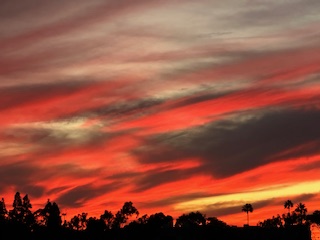
in each sunrise and sunset

You streak the sky with dazzling metaphors of justice,

the strength of your arm gleaming from goldleaf stanzas.

You scatter the proud in their conceit

with your fuchsia-streaked hair,

Lift up the lowly in glittering ruby slippers,

and nourish the hungry from an Orange Crush fountain.

“Trust me” shines like a simmering silver pendant

around the neck of messenger-bearing clouds.

Your faithful help remains constant

from the pink pulchritude of dawn

to the verdant gloaming of dusk.

Come O Creator of form and beauty,

help us remember your promise of mercy:

every generation that blesses will be blessed!

O Ancient Storyteller!

O Ancient Storyteller,

author of pithy parables about lost sheep,

hidden coins, and mustard seeds,

the account of your birth still captivates

our twenty-first century technology-driven culture.

By your life, death, and resurrection,

you inscribe deep meaning into suffering,

and transform mortality with happily forever after.

Your story is our story.

Come, O Teller of Tales,

help us find the chapters of our lives

hidden inside yours.

O Writing!

During the past three weeks, on Tuesday mornings, I have been guiding a creative journal writing workshop called WRITE THAT DOWN at the beautiful Community House in Dana Point. For two hours, twenty-something people come together to write down memories and details of their lives based on my “something significant” prompts. Oh! I am in heaven! I get to combine the two activities I most love–writing and teaching–with the added bonus of being in person with other writers. An extrovert’s dream come true! 

Coincidentally, the last session on December 19 happens midst the Christian tradition of praying the O Antiphons. Beginning on December 17, these are prayers based on Old Testament images imploring “Emmanuel,” (translated as “God With Us”) to break into our everyday lives. My friends Fr. Dave Denny and Tessa Bielecki at the Desert Foundation have taught extensively on this topic for many years. They suggest each of us write down our own original antiphons using images meaningful to us. (Here’s the link to their wonderful podcast on this topic https://tessabielecki.com/reflect/animal-guides/)

Oh what a splendid idea!

I often wake up during the wee hours right before dawn and lately have laid in bed pondering what images I would choose. There are many possibilities but it occurred to me that I could write about WRITING! As Creator of the human mind that formed language and the capacity for writing words, maybe this is divine inspiration. Oh what fun to create A WRITER’S O ANTIPHONS!

So for the next week, beginning tomorrow, I will write and share a stanza with you. If so inclined, I encourage you to do the same. Scribble away and then share what has emerged with a good listener. Do not worry about editing, punctuation, spelling, or grammar. Lock the inner critic in the cellar. Think of this practice as a little gift to yourself. Together, as Advent ebbs, let us enter the Christmas Season with an ecstatic Oh! on our lips.

To be continued. . .

A Cosmic Advent

I awoke from sleep this morning thinking about the miracle of the solar system. Don’t ask me why. Maybe it was the golden full moon I saw on Wednesday night as I drove to a friend’s house for a birthday party. Maybe because Venus brightly illuminates the sky when I walk my dog in the darkness. Whatever the case, I was delighted because I usually wake up worrying about relationships.

December, my favorite month of the whole year, has arrived, and with it, the first Sunday of Advent. I have written a lot about this liturgical season over the years but mysteriously, something new forever emerges. Waking with thoughts of the solar system is, to me, a signal of transcendence, an invitation to contemplate Advent in a more cosmic way. What a wonder to begin this cherished time daydreaming about the phenomenon of the earth rotating on its axis as the seasons change, our planet orbiting dutifully around the sun, and the days getting shorter and darker until Winter Solstice (December 21), and the glorious coming of the light.

From early in December, I can intentionally ponder, once again, the great arrival story of the Incarnation, “God with us,” which has echoed through the origins of the universe, back to the Big Bang. Advent arrives silently and quietly allowing me to slip into the deep whenever the cultural hype gets too overwhelming. Advent beckons me to return to the ancient story of the Light of the World which has captivated millions for centuries. What a relief!  And yet, in some ways, the Season of Advent can be more difficult to practice than Lent because it is so counter-cultural.

People “need a little Christmas” and it seems as though they need it earlier and earlier every year. Granted, we are highly influenced by a consumer society but I think our rush into the Christmas season is driven more by a deep longing for celebration, a lost art in my humble opinion. Alas, considering the implications of the story of the “Cosmic Christ,” we should presumably celebrate the Incarnation every day, not just in December. Unfortunately, we do not know how to do that very well.

Last week, some friends and I got together to prepare ourselves for Advent. We gazed at the painting “Ancient Days” by William Blake (see above) and other depictions of the the Old Testament prophets, the Annunciation, Visitation, and the Nativity. We listened to some soulful music and read inspiring poems and Scripture readings. Immediately, a palpable sense of the real presence of Christ stirred among us. Caught up in the artistic imagination left behind in these beautiful works, we felt cosmically connected in a timeless way. We realized once again that the ancient story of Jesus is our story, found easily with the heightened awareness and attentiveness that Advent provides.

As we enter into a very short Advent season this year (the fourth week is only one day), I invite you to take a few leisurely walks and gaze at the sky. Listen to some music, read some edifying poems and novels, look at works of art. Consider that despite our tininess in a vast universe, we share specks of stardust with all creation, including the Holy One, who, because of the Incarnation, holds the core of existence together in love. May you awaken each day with a constellation of new insights on your mind and heart this Advent and Christmas season!

I Will Remember You

One of my all-time favorite songs is “I Will Remember You,” by Sarah MacLachlan. The music and lyrics fill me with powerful emotions and give me carte blanche permission to celebrate my friends and ancestors who have died. I listen to the song frequently but especially on November 1 and 2 when the holy days of All Saints and All Souls are celebrated in the liturgical calendar. Mexican culture, very prominent in Southern California, also celebrates “Dia de los Muertos,” which seems like a combination of the two. All three hold significance because these yearly observances bring us face-to-face with death, a reality most people struggle to understand and accept.

I remember when I was a little girl in Catholic school religion class, the sister/teacher asked us to make a list of our top ten questions for God. Without hesitation, I wrote, “Why does everything have to die?” While I was given the usual perfunctory, theological answers by well-meaning adults, my curious mind and restless soul were never satisfied and that question became the heart of my life-long spiritual quest.

Even though we were taught that heaven was the reward for faithfulness, I felt frightened (and yes, a little spooked) at the thought of death when I was young. Paradoxically, I was steeped in the Midwestern dramatic seasonal weather changes, where life and death surrounded us like a mantle of normalcy. We ate, drank, and even laughed with community during numerous “wakes” at funeral homes and then knelt in the church in solemn reverence during the funerals. Later, when I accompanied my mom to daily mass and heard her sing the haunting refrains of the requiem for the souls of the dead, tears of deep lament would fall. (I can still hear her beautiful voice in my head.)

Comfort came to me when these special holy days arrived at the beginning of November. Encouraged to look beyond the superficial, I felt connected to what we call the “communion of saints.” I read the biographies of those canonized with a big “St.” and felt buoyed up by that river of grace, I was also drawn to stories my mother and her sisters told about their parents and ancestors who seemed so alive and vibrant in their memories. I loved looking at their old photographs and wondering what their hopes and dreams had been. Remembrance kept them alive, I realized, and in that way, death was conquered. The Paschal Mystery (the story of the life, death and resurrection of Jesus) materialized before my eyes as I gazed at the photos and has remained the most fascinating, mysterious, and compelling meditation of my life.

When we settled in our first home in California, far away from where I was born and raised, I asked my parents for extra copies of the old photos of family members, many I had never even met. Pleased that I wanted the faded and dusty snapshots, they were generous in sharing them. I enjoyed restoring and framing these precious possessions and for many years, displayed them on a small table in my living room. After my parents died, I acquired even more photos for my collection. Eventually, I constructed an ancestor wall of remembrance, still in place today. Some days I sing “I Will Remember You,” when I focus on them, the song like a prayer.

Now in the final chapters of life, I hope to be remembered too. I know I am not alone. Even Jesus feared the apostles would not remember him when he asked them to eat bread and drink wine in his memory. What do I want to be remembered for? That is an interesting question, one I have filled many journals pondering. Bottom line, I simply hope to be remembered as someone who embraced life creatively and whole-heartedly; as someone truly present in relationships and who squandered everything for love. I also hope I am remembered for dying well, the flip side of the coin (working on that). Whether I am remembered in digital snapshots on mobile phones or “old school” photographs on the wall, in the end, it is enough simply to be remembered.

Where once there was a darkness, a deep and endless night, you gave me everything you had, oh you gave me light. I will remember you, will you remember me? Don’t let your life pass you by. Weep not for the memories.” –Sarah MacLachlan

The Book of Nature

I sat in my backyard, deeply immersed in the final chapter of The Book of Nature: The Astonishing Beauty of God’s First Sacred Text by Barbara Mahaney when several young men appeared at my doorstep in hopes of selling me pest control services. The interruption jarred me. They earnestly and loudly launched into a persuasive sales pitch about how all my neighbors had hired them to get rid of “bad bugs” with an “environmentally safe” pesticide that could be applied once a month. Wouldn’t I like to join the crusade? Imagine their puzzled looks when I sanctimoniously stated that I do not desire to annihilate insects. This is nothing new. I have long been known to capture spiders with paper cups for release. However, my implacable-sounding resolve took me by surprise. Clearly, Barbara Mahaney’s insights had further renewed my fierce respect for all living things.

When I went back to reading, I paused first and sank into a kind of reverie. A few bees circled blooming succulent plants. A pesky dragonfly landed on my arm. My rambunctious cat acrobatically scaled our enormous star pine tree. I felt poised on the threshold of earthly, liminal, and heavenly spaces displayed in these ordinary sightings. I thought about the author, her beautiful prose, meticulous research, and gift for seeing beyond the surface and felt a surge of love and gratitude for this wonderful new take on the “sacred text that needs no translation, unfurled without words.” (6)

Barbara Mahaney intuited when she was very young that the natural world was “God’s cathedral” but as an avid reader and prolific writer, she set out to uncover proof from other sources. Research took her back to an “awe-infused field guide,” called The Book of Nature dating from 1481 (author unknown), and another similar writing from 1615 by Galileo. She also read Tertullian who wrote eloquently in the second century about God’s presence hidden in plain sight. Using the Russian doll method of reading, that is, one book leading to another, another, and another, Mahaney found out that all writers ended with the same conclusion: “God infused the natural world with symbol and meaning and if we learn to read what’s there we might more fully comprehend the Creator.” (2)

“I read with my heart and my soul wide open. I read with my loam-stained mitts sunk deep in the earth, and my mud-splashed boots crunching the autumn woods. I read with my nose to the glass from my upstairs nook. I read while taking out the trash and when dumping sunflower seed in the backyard feeder. I read when the rain taps at my window and awakes me from slumber. I read when I open my eyes to an ice-crystal dawn. And the more I read, the more I see and feel and hear. . .my God reaching out to me in all God’s astonishments and beauties and wonders. It’s a book without end and I’ll never stop reading.” (5)

Mahaney also re-read the bible and other sacred books alongside her research on God’s presence in nature. She discovered they all radiate with the belief that wind, water, land, plants, trees, and wildlife, are a “panentheism” that cannot be denied. Deus absconditus, the hidden God, shouts from every stone and sunflower if the eyes and ears and heart are fully awakened. (14)

As a spiritual director, I take notice when my companions speak capaciously about divine intimations in the natural world. I also note the absence of such talk. The difference between the two in the evolution of spiritual awareness is noteworthy.  The journey inward inevitably beckons us to connect with the earth, the elements, flora and fauna, as an essential step, and one that is life-long. In either case, I frequently suggest reading more about nature as a springboard for contemplation–taking a walk, sitting at water’s edge, collecting rocks and weeds, listening to birdsong. The ancient practice of connecting to the natural world feeds both body and soul. Eloquent words and beautiful insights, such as those provided by Barbara Mahaney, are powerful catalysts to get the sacred alchemy going.

For instance, I saw the film “Oppenheimer” at the same time I was reading this book. Like so many others, I was stunned by the story behind the development of the atomic bomb and could not get my mind off the devastating after-effects on our world. Struggling mightily, my spirits were uplifted when I read Barbara Mahaney’s words: “Most famous is the story of the seeds of Hiroshima. . .Barely a month after the bombing, though, rising from the charred bits, less than half a mile from the explosion’s radioactive center, red canna lilies and delicate wildflowers began to sprout and bloom amid the wasteland.” (39) She then quotes John Hersey’s article in the New Yorker, “Out of horror, erupted beauty. Ever since, the survivor seeds of Hiroshima have been revered in Japan, ‘the faith that grew out of the ashes.’” (40)

The Book of Nature has edified my life and I recommend it with dogged determination to spread the word, and support Barbara Mahaney’s beautiful vision that a return to nature is a return to our divine origins. “It’s a book without end, and I’ll never stop reading.” (5)

Lessons From Labor

How many jobs have you had in your life? That was the question posed recently by some friends. Wow! I had to stop and think. A lot, I reported. Later, I made a list, going way back to the days I babysat for a mere twenty-five cents an hour, fifty cents for more than three kids. (Yes, I grew up in the dark ages when gasoline was less than thirty cents a gallon). Astonishingly, twenty jobs landed on my list, nineteen before I was thirty-five, when at last I settled into a steady, long career in parish ministry.

Why did I have so many jobs? Easy answer: I needed and wanted money and I started young. In my family, we were never given cash allowances for chores and were expected to support the family by paying our way as soon as we were old enough to contribute. My siblings and I never questioned this mostly unspoken rule, rather, we simply accepted it (as did others of my generation) and willingly entered the workforce as young teenagers.

My parents modeled that a good job, well done, was not only what decent people did, but also what God expected. My dad was a firefighter without a college education but made the best of his blue-collar status. My mother went to college and became a Catholic school teacher. She made a fraction of what a public school teacher earned but her deep faith was more important to her than money and, she believed, worth self-sacrifice. They both worked tirelessly, without complaint, having survived the devastation of the Great Depression.

Although I am now completing my second year of retirement, I still ponder the lessons learned from working most of my life and am curious about current attitudes. Clearly, something has shifted in American consciousness, especially since the pandemic. People seem to work even longer hours, (many from home, online) take fewer vacations, and suffer more from workaholism, (a postmodern word if there ever was one). When polled, they report feelings of restlessness, being unappreciated for their efforts, and anxiety about money and job security. Many parents are strident about not wanting their teen children to work so they can concentrate all their efforts on school. The result? A multitude of young folks who seem ambivalent or even fearful about getting a job.

Have the young been given too much by their wealthy parents? If they do not need money like I did when I was their age, is there even a reason to work? Have we adults over-sheltered them in our concern about reducing stress levels? Or does work have some intrinsic value that we cherish beyond the independence that earning money can bring? How do we cultivate that? These are questions that perhaps have no definitive answers but are still important to consider.

This Labor Day weekend, I think about how my many odd jobs shaped and molded me. Every single one, including some I abhorred, taught me valuable lessons. For instance, when I was a mere fourteen, my aunt, who worked at the local creamery, hired me to be an ice cream sampler at the local grocery store. I was paid five dollars a day to dole out tiny cones of the latest flavor to shoppers and their kids, enticing them to purchase a half gallon or more. My hands were sticky for six hours and although I loved ice cream, would eventually feel sickened by a mere whiff of butter brickle. Although I was good at plastering a smile on my face, I was secretly embarrassed when friends my age saw me. At summer’s end when I refused to continue that job, my dad was indignant. Was I too proud? Too snobbish to earn good money? That hurt but I never forgot his bottom line that hard work, no matter what it was, dignified the worker and should be respected.

That autumn, after I spent a short, unpleasant stint making potato salad at a popular chicken take-out place, I was determined to find a job that would be more in line with my aesthetics. I applied and landed a position as a page in our hometown library, which had always been a sanctuary for me. Even though I was branded as a “bookish egghead,” by my peers, I loved that job and worked there until I graduated. I memorized the Dewey Decimal System, learned how to research books in the card catalog, got proficient at alphabetization, and became up close and personal with famous authors and titles. I also learned about silence, a love/hate relationship that remains a source of spiritual fascination. Although I did not pursue a career in the field, I retain a soft spot in my heart for libraries and bookstores.

Another life lesson came to me after I took a speed-reading course as a senior in high school. When the instructor recognized that I had a natural talent for reading quickly and retaining content, he hired me to be a demonstrator during his sales pitches to various high schools. After explaining the course, he asked a student to go to their library and choose a book, any book, for me to speed read. Then came my shining moment. I took to the stage and when the timer started, would read silently for five minutes. There were always gasps from the audience at how quickly I turned the pages. Time up, I gave a summary of what I had retained. Legions signed up for the course! To this day, speed-reading is second nature to me, explaining why I read twice as many books as most people can manage.

More valuable lessons followed from jobs I worked in offices, retail stores, cosmetic sales, bookkeeping, tutoring, teaching preschool, and much later instructing in college classrooms, and finally, as a Faith Formation Director. Underneath my work experience, a longing developed to pursue meaningful work. I ultimately realized that I wanted a career that left the world a better place and made me a better person, which is why I ended up in parish ministry and remained there for thirty-seven years. I truly loved my work, which I never thought of as work, but as a calling. I still miss it.

The biggest lesson learned from all my experience is the importance of finding work that you love because, as the adage goes, if you “choose a job you love, you will never work a day in your life.” This Labor Day weekend, I pray that my grandchildren are as fortunate as I was and will follow an evolutionary path that contributes both to personal growth and the collective good. Yet, in the end, every step, no matter how menial, paves the way.

Thanks for the Memories

Memory is a mercurial staple in my life.  People often marvel at how I can remember specific details of long-forgotten events – a family trait my siblings and I inherited from my mother’s family. My head constantly swirls with faces and places and because I have accustomed myself to finding God in the ordinary, these memories are like open doors beckoning me to venture deeper into the vast mysteries of life.

Awareness of this trait has only come to me in my wisdom years.  In the first half of life, I did not realize that only some people (like me) are tirelessly fascinated with the past. My strong inner pull toward ancestral stories, vintage photographs, old books, antiques, and iconic spiritual artifacts, should probably have clued me to this realization sooner. Nonetheless, I am grateful to make this full disclosure now, educated no doubt by my deep dive into religion, the many tools I use for spiritual growth (like the Enneagram), and my long love of reading and writing.

Admittedly, memory is not altogether reliable nor verifiable and so I willingly acknowlege my own bias. Fortunately, though, I do possess original source materials for reference checking, having spent many years keeping handwritten journals. I even took several classes when I was in my thirties on how to use them for spiritual growth. Most often, I journaled to process the spaghetti-like jumble of thoughts and feelings that occupied my mind. As I matured, these scribblings morphed into prose poems, complete with prayer-like cries of the heart, quotes from saints and beloved authors, and the strange “God-incidences” that flooded my ministerial work. Trunk loads of these volumes were squirreled away in many nooks and crannies of my home and some were digitally saved. I learned so much from journal writing and am still a big advocate for this practice!

This summer, I purged nearly all the hand-written journals. Don’t sound the alarm! The crumbling oldies were mostly an embarrassment of self-absorption and not fit for public consumption. Despite some qualms about destroying my young, distinctive handwriting, a lighter and more peaceful mood came upon me after the ripping and shredding. I also printed out the many poems that had been saved on the computer and organized them by years into looseleaf notebooks, now in a metal file cabinet for safekeeping. These comprise hundreds of pages that I hope to curate someday. If not, I possess few worries as I doubt anyone will have the patience to read them. Am I officially done now? Not by a long shot.

The urgent desire in my seventh decade has nudged me to explore memoir writing. Many people my age feel compelled to try their hand at this endeavor and maybe this is more about “the doing” than some great legacy we hope to leave behind. Although I have done my share of writing our family history throughout the years, (I wrote a children’s book, The Photograph, based on a story about my grandmother, Remembrances of a Storycatcher, a documentation of our ancestors, and several whimsical self-published paperbacks of fun memories), there are many more unwritten personal stories my heart longs to tell.

I decided to begin by simply allowing the memories that want a voice to emerge. I am currently writing about my early college years as a theater major, focusing primarily on the USO Tour I went on while a student at the University of Minnesota. Since I already write for at least two hours per day, a spiritual practice I faithfully keep, finding time is not difficult. Writing about such intimate content is another matter. Memoirs require opening doors in the cellar and attic of life that have been shut for many years. Some memories have unprocessed pain and anguish attached to them. Some have joys that distract me from finishing! But so far, with a cast of invisible characters by my side, I feel like an intoxicated time traveler, swept away on a great adventure, ready for anything.

Each day when I sit down to write, I sing “Thanks for the memories. . .” and for the gift of living long enough to have the time to embrace this unexpected opportunity. Personal growth only ends when we decide to give up trying. Like a tireless cheerleader, the Holy One perpetually calls us to evolve and draws us lovingly into union, our deepest human desire.