The Book of Nature

I sat in my backyard, deeply immersed in the final chapter of The Book of Nature: The Astonishing Beauty of God’s First Sacred Text by Barbara Mahaney when several young men appeared at my doorstep in hopes of selling me pest control services. The interruption jarred me. They earnestly and loudly launched into a persuasive sales pitch about how all my neighbors had hired them to get rid of “bad bugs” with an “environmentally safe” pesticide that could be applied once a month. Wouldn’t I like to join the crusade? Imagine their puzzled looks when I sanctimoniously stated that I do not desire to annihilate insects. This is nothing new. I have long been known to capture spiders with paper cups for release. However, my implacable-sounding resolve took me by surprise. Clearly, Barbara Mahaney’s insights had further renewed my fierce respect for all living things.

When I went back to reading, I paused first and sank into a kind of reverie. A few bees circled blooming succulent plants. A pesky dragonfly landed on my arm. My rambunctious cat acrobatically scaled our enormous star pine tree. I felt poised on the threshold of earthly, liminal, and heavenly spaces displayed in these ordinary sightings. I thought about the author, her beautiful prose, meticulous research, and gift for seeing beyond the surface and felt a surge of love and gratitude for this wonderful new take on the “sacred text that needs no translation, unfurled without words.” (6)

Barbara Mahaney intuited when she was very young that the natural world was “God’s cathedral” but as an avid reader and prolific writer, she set out to uncover proof from other sources. Research took her back to an “awe-infused field guide,” called The Book of Nature dating from 1481 (author unknown), and another similar writing from 1615 by Galileo. She also read Tertullian who wrote eloquently in the second century about God’s presence hidden in plain sight. Using the Russian doll method of reading, that is, one book leading to another, another, and another, Mahaney found out that all writers ended with the same conclusion: “God infused the natural world with symbol and meaning and if we learn to read what’s there we might more fully comprehend the Creator.” (2)

“I read with my heart and my soul wide open. I read with my loam-stained mitts sunk deep in the earth, and my mud-splashed boots crunching the autumn woods. I read with my nose to the glass from my upstairs nook. I read while taking out the trash and when dumping sunflower seed in the backyard feeder. I read when the rain taps at my window and awakes me from slumber. I read when I open my eyes to an ice-crystal dawn. And the more I read, the more I see and feel and hear. . .my God reaching out to me in all God’s astonishments and beauties and wonders. It’s a book without end and I’ll never stop reading.” (5)

Mahaney also re-read the bible and other sacred books alongside her research on God’s presence in nature. She discovered they all radiate with the belief that wind, water, land, plants, trees, and wildlife, are a “panentheism” that cannot be denied. Deus absconditus, the hidden God, shouts from every stone and sunflower if the eyes and ears and heart are fully awakened. (14)

As a spiritual director, I take notice when my companions speak capaciously about divine intimations in the natural world. I also note the absence of such talk. The difference between the two in the evolution of spiritual awareness is noteworthy.  The journey inward inevitably beckons us to connect with the earth, the elements, flora and fauna, as an essential step, and one that is life-long. In either case, I frequently suggest reading more about nature as a springboard for contemplation–taking a walk, sitting at water’s edge, collecting rocks and weeds, listening to birdsong. The ancient practice of connecting to the natural world feeds both body and soul. Eloquent words and beautiful insights, such as those provided by Barbara Mahaney, are powerful catalysts to get the sacred alchemy going.

For instance, I saw the film “Oppenheimer” at the same time I was reading this book. Like so many others, I was stunned by the story behind the development of the atomic bomb and could not get my mind off the devastating after-effects on our world. Struggling mightily, my spirits were uplifted when I read Barbara Mahaney’s words: “Most famous is the story of the seeds of Hiroshima. . .Barely a month after the bombing, though, rising from the charred bits, less than half a mile from the explosion’s radioactive center, red canna lilies and delicate wildflowers began to sprout and bloom amid the wasteland.” (39) She then quotes John Hersey’s article in the New Yorker, “Out of horror, erupted beauty. Ever since, the survivor seeds of Hiroshima have been revered in Japan, ‘the faith that grew out of the ashes.’” (40)

The Book of Nature has edified my life and I recommend it with dogged determination to spread the word, and support Barbara Mahaney’s beautiful vision that a return to nature is a return to our divine origins. “It’s a book without end, and I’ll never stop reading.” (5)

Lessons From Labor

How many jobs have you had in your life? That was the question posed recently by some friends. Wow! I had to stop and think. A lot, I reported. Later, I made a list, going way back to the days I babysat for a mere twenty-five cents an hour, fifty cents for more than three kids. (Yes, I grew up in the dark ages when gasoline was less than thirty cents a gallon). Astonishingly, twenty jobs landed on my list, nineteen before I was thirty-five, when at last I settled into a steady, long career in parish ministry.

Why did I have so many jobs? Easy answer: I needed and wanted money and I started young. In my family, we were never given cash allowances for chores and were expected to support the family by paying our way as soon as we were old enough to contribute. My siblings and I never questioned this mostly unspoken rule, rather, we simply accepted it (as did others of my generation) and willingly entered the workforce as young teenagers.

My parents modeled that a good job, well done, was not only what decent people did, but also what God expected. My dad was a firefighter without a college education but made the best of his blue-collar status. My mother went to college and became a Catholic school teacher. She made a fraction of what a public school teacher earned but her deep faith was more important to her than money and, she believed, worth self-sacrifice. They both worked tirelessly, without complaint, having survived the devastation of the Great Depression.

Although I am now completing my second year of retirement, I still ponder the lessons learned from working most of my life and am curious about current attitudes. Clearly, something has shifted in American consciousness, especially since the pandemic. People seem to work even longer hours, (many from home, online) take fewer vacations, and suffer more from workaholism, (a postmodern word if there ever was one). When polled, they report feelings of restlessness, being unappreciated for their efforts, and anxiety about money and job security. Many parents are strident about not wanting their teen children to work so they can concentrate all their efforts on school. The result? A multitude of young folks who seem ambivalent or even fearful about getting a job.

Have the young been given too much by their wealthy parents? If they do not need money like I did when I was their age, is there even a reason to work? Have we adults over-sheltered them in our concern about reducing stress levels? Or does work have some intrinsic value that we cherish beyond the independence that earning money can bring? How do we cultivate that? These are questions that perhaps have no definitive answers but are still important to consider.

This Labor Day weekend, I think about how my many odd jobs shaped and molded me. Every single one, including some I abhorred, taught me valuable lessons. For instance, when I was a mere fourteen, my aunt, who worked at the local creamery, hired me to be an ice cream sampler at the local grocery store. I was paid five dollars a day to dole out tiny cones of the latest flavor to shoppers and their kids, enticing them to purchase a half gallon or more. My hands were sticky for six hours and although I loved ice cream, would eventually feel sickened by a mere whiff of butter brickle. Although I was good at plastering a smile on my face, I was secretly embarrassed when friends my age saw me. At summer’s end when I refused to continue that job, my dad was indignant. Was I too proud? Too snobbish to earn good money? That hurt but I never forgot his bottom line that hard work, no matter what it was, dignified the worker and should be respected.

That autumn, after I spent a short, unpleasant stint making potato salad at a popular chicken take-out place, I was determined to find a job that would be more in line with my aesthetics. I applied and landed a position as a page in our hometown library, which had always been a sanctuary for me. Even though I was branded as a “bookish egghead,” by my peers, I loved that job and worked there until I graduated. I memorized the Dewey Decimal System, learned how to research books in the card catalog, got proficient at alphabetization, and became up close and personal with famous authors and titles. I also learned about silence, a love/hate relationship that remains a source of spiritual fascination. Although I did not pursue a career in the field, I retain a soft spot in my heart for libraries and bookstores.

Another life lesson came to me after I took a speed-reading course as a senior in high school. When the instructor recognized that I had a natural talent for reading quickly and retaining content, he hired me to be a demonstrator during his sales pitches to various high schools. After explaining the course, he asked a student to go to their library and choose a book, any book, for me to speed read. Then came my shining moment. I took to the stage and when the timer started, would read silently for five minutes. There were always gasps from the audience at how quickly I turned the pages. Time up, I gave a summary of what I had retained. Legions signed up for the course! To this day, speed-reading is second nature to me, explaining why I read twice as many books as most people can manage.

More valuable lessons followed from jobs I worked in offices, retail stores, cosmetic sales, bookkeeping, tutoring, teaching preschool, and much later instructing in college classrooms, and finally, as a Faith Formation Director. Underneath my work experience, a longing developed to pursue meaningful work. I ultimately realized that I wanted a career that left the world a better place and made me a better person, which is why I ended up in parish ministry and remained there for thirty-seven years. I truly loved my work, which I never thought of as work, but as a calling. I still miss it.

The biggest lesson learned from all my experience is the importance of finding work that you love because, as the adage goes, if you “choose a job you love, you will never work a day in your life.” This Labor Day weekend, I pray that my grandchildren are as fortunate as I was and will follow an evolutionary path that contributes both to personal growth and the collective good. Yet, in the end, every step, no matter how menial, paves the way.

Thanks for the Memories

Memory is a mercurial staple in my life.  People often marvel at how I can remember specific details of long-forgotten events – a family trait my siblings and I inherited from my mother’s family. My head constantly swirls with faces and places and because I have accustomed myself to finding God in the ordinary, these memories are like open doors beckoning me to venture deeper into the vast mysteries of life.

Awareness of this trait has only come to me in my wisdom years.  In the first half of life, I did not realize that only some people (like me) are tirelessly fascinated with the past. My strong inner pull toward ancestral stories, vintage photographs, old books, antiques, and iconic spiritual artifacts, should probably have clued me to this realization sooner. Nonetheless, I am grateful to make this full disclosure now, educated no doubt by my deep dive into religion, the many tools I use for spiritual growth (like the Enneagram), and my long love of reading and writing.

Admittedly, memory is not altogether reliable nor verifiable and so I willingly acknowlege my own bias. Fortunately, though, I do possess original source materials for reference checking, having spent many years keeping handwritten journals. I even took several classes when I was in my thirties on how to use them for spiritual growth. Most often, I journaled to process the spaghetti-like jumble of thoughts and feelings that occupied my mind. As I matured, these scribblings morphed into prose poems, complete with prayer-like cries of the heart, quotes from saints and beloved authors, and the strange “God-incidences” that flooded my ministerial work. Trunk loads of these volumes were squirreled away in many nooks and crannies of my home and some were digitally saved. I learned so much from journal writing and am still a big advocate for this practice!

This summer, I purged nearly all the hand-written journals. Don’t sound the alarm! The crumbling oldies were mostly an embarrassment of self-absorption and not fit for public consumption. Despite some qualms about destroying my young, distinctive handwriting, a lighter and more peaceful mood came upon me after the ripping and shredding. I also printed out the many poems that had been saved on the computer and organized them by years into looseleaf notebooks, now in a metal file cabinet for safekeeping. These comprise hundreds of pages that I hope to curate someday. If not, I possess few worries as I doubt anyone will have the patience to read them. Am I officially done now? Not by a long shot.

The urgent desire in my seventh decade has nudged me to explore memoir writing. Many people my age feel compelled to try their hand at this endeavor and maybe this is more about “the doing” than some great legacy we hope to leave behind. Although I have done my share of writing our family history throughout the years, (I wrote a children’s book, The Photograph, based on a story about my grandmother, Remembrances of a Storycatcher, a documentation of our ancestors, and several whimsical self-published paperbacks of fun memories), there are many more unwritten personal stories my heart longs to tell.

I decided to begin by simply allowing the memories that want a voice to emerge. I am currently writing about my early college years as a theater major, focusing primarily on the USO Tour I went on while a student at the University of Minnesota. Since I already write for at least two hours per day, a spiritual practice I faithfully keep, finding time is not difficult. Writing about such intimate content is another matter. Memoirs require opening doors in the cellar and attic of life that have been shut for many years. Some memories have unprocessed pain and anguish attached to them. Some have joys that distract me from finishing! But so far, with a cast of invisible characters by my side, I feel like an intoxicated time traveler, swept away on a great adventure, ready for anything.

Each day when I sit down to write, I sing “Thanks for the memories. . .” and for the gift of living long enough to have the time to embrace this unexpected opportunity. Personal growth only ends when we decide to give up trying. Like a tireless cheerleader, the Holy One perpetually calls us to evolve and draws us lovingly into union, our deepest human desire.

Always Reading

Summer has finally made an entrance! Those of us who live on the coast of Southern California may still awaken to the marine layer but now the sun burns the gloom away early. I sigh with relief when I feel the warmth on my shoulders and take to the patio to commence one of my favorite pastimes: reading. Always a major source of enjoyment, education, and escapism, I eagerly look forward to getting lost in a story or a fascinating spiritual book with songbirds and summer breezes in the background.

I read a lot. Always have. Recently, experts report that most people do not read as much as they used to, especially children, who prefer watching YouTube and the like. While this concerns me too, nearly everywhere I go I see people glued to their phones, reading something. (Okay, some are watching cat videos.) The point is, whether reading something superficial or deep, spontaneously reading everything is how I got started long before we had computers in our pockets.

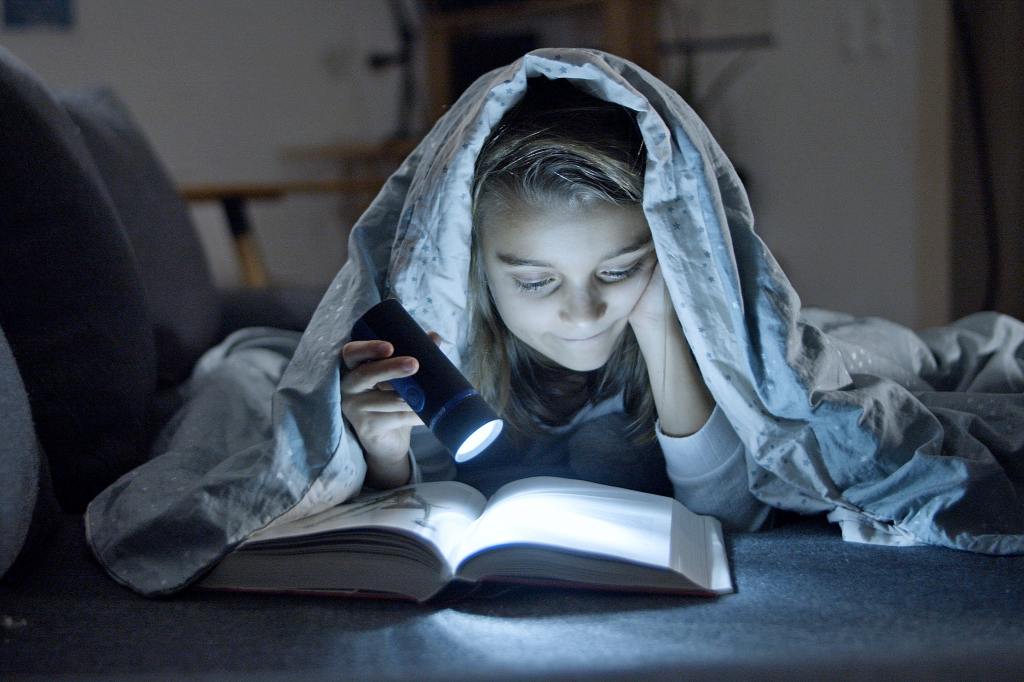
My brother and I would read the sides of the cereal boxes while we crunched our cornflakes in the morning or the World Book Encyclopedia located next to my dad’s recliner almost every afternoon. We read the newspaper comics to each other and the billboards we found amusing on road trips. Long after lights were supposed to be out, we would hide under the covers and read by flashlight, often falling asleep with our faces smashed on a page. I guess one could say back in the olden days when I was young, there wasn’t much else to do and not many shows to watch on television. Maybe so but I knew plenty of kids who did not read even then. Who can say why we cultivated this enormous love of literature? Maybe it was just in the genes. Summertime reading was especially encouraged by my mother who was a third-grade teacher.

Whatever the reason, my head and heart have significantly benefitted from this early formation. Some years ago, influential mentors advised me, since there are so many books, to read “only the best” and gave me a sizable reading list that would daunt even the most robust of readers. I took this advice to heart and encourage you to do the same. Fiction or nonfiction? Although I do love a great story, I usually have one of each going at the same time. If you need recommendations, here’s my list of recent favorites to get you started:

  1. Demon Copperhead by Barbara Kingsolver (one of my all-time favorite authors–I recommend all of her books). Having just won the Pulitzer Prize for literature, Kingsolver’s novel is based on Dicken’s classic David Copperfield (also a must-read). A page-turner, set in modern-day Appalachia, you will never feel the same about the state of foster care in America when you finish.
  2. Take My Hand by Dolen Perkins-Valdez, is a novel based on recent historical accounts of the forced sterilization of poor African American women in the South. This story deeply touched my soul. I cannot stop thinking about it.
  3. The One in a Million Boy, We Were the Kennedys, and Any Bitter Thing by Monica Wood (my new favorite author). Weaving her Catholic upbringing with stunningly descriptive settings and unforgettable characters, I am in awe of this writer and think you will be too!
  4. The Lincoln Highway, A Gentleman in Moscow by Amor Towles. Both of these books drew me into worlds I never knew existed. Among his many gifts, Towles possesses a special knack for character development that makes the reader feel personally involved in their fictional lives.
  5. Fellowship Point by Alice Elliott Dark is a novel about friendships, not only with people but with places. Reflecting on eighty years, the main characters stimulate many thoughts about aging, writing, marriage, children, and the legacies associated with longevity. Beautifully crafted words and situations, I was sad when I turned the last page.
  6. The Pale Blue Eye, My Life with Jackie, Courting Mr. Lincoln by Louis Bayard; I fell in love with Bayard–ask any of my friends whom I have implored to read his books. How he can write so uniquely about historical figures boggles the mind and stirs the imagination.
  7. Revelations, Illuminations, Ecstasy, (three separate books)by Mary Sharratt. This talented writer will spellbind you with her engrossing storytelling about radically spiritual women.
  8. The Book of Nature and Slowing Time by Barbara Mahany, whose beautiful spiritual insights about God’s ubiquitous real presence in everything and everyone will surely change or deepen your worldview.
  9. The Diary of Jesus Christ by Bill Cain, SJ writes as if he is Jesus recording his experiences in a journal. I guarantee you will never be the same after you read this edifying book based on the New Testament.
  10. State of Wonder, The Dutch House, Bel Canto by Ann Patchett (or anything she writes). I really do not have adequate words to express how much I love this author. Just give her a try and you will see what I mean!

If you do not want to purchase books or enjoy reading the electronic versions, (I do!), download the Libby or Hoopla app on your phone and borrow them from the library. I also recommend frequenting the Friends of the Library bookstores where you can buy bestsellers for under $5.

Reading can uplift the soul in miraculous ways because divine themes can be found between the lines of every human story, both real and make-believe. Conversations about what you read add another dimension. Maybe you will inspire others to stretch beyond social media and read!

Restless for Summer

Is it summer yet? These days I feel like a restless teenager in the back of the family station wagon. I go outside every morning to check the temperature and observe the sky. I consult the weather app on my phone constantly for some hopeful signals of lasting warming trends. While I know that the solstice will not appear on the calendar until June 20th, graduation leis are for sale at Costco and neighborhood children are riding their bikes in the early morning hours. I am fooled for a moment into thinking that maybe the Earth has already rotated on its axis but with the gray skies ominously heavy, and the breezes chilly and damp, my faith wavers.

Even though “June Gloom” predictably returns each year to the coast of Southern California, everywhere I go, people are grumbling about the weather and cursing bleak reports of more cooling and possible showers. Remember when we used to joke that California weather reporters could simply read the same “sunny and warm” script every day? Not so now, after a very long, wet, and cold winter and spring. I am ashamed to admit this but I have joined ranks with the crabby as I scrutinize other parts of the country with envy. Tucson is predictably clear and hot. The East Coast enjoys an early warming trend. Even the Midwest is experiencing glorious sunny days with low humidity. My brother and his wife from Iowa just came for a visit and could not wait to get back to their idyllic eighty-degree weather. I wanted to pack a bag and leave with them! To circumvent the gloom, I ruminate about why summer is so symbolic and inevitably backtrack to childhood memories.

When I was growing up in small town Minnesota, summer meant freedom to come and go as we pleased, each day unplanned and gloriously spacious. We rode our bikes everywhere, including to “Recreation” at the local public school. The city sponsored daily youth activities for free: learning how to make crafts, sing songs, put on skits, play sports, and make a spectacular float for the annual “Pet Parade” at the end of August. Dogs, cats, chickens, rabbits, even turtles, were dressed up and pushed in baby strollers or wagons. Everyone competed to win a coveted blue ribbon. Kids decorated their bikes with crepe paper and wore costumes. We paraded down Main Street from the public library to the bandstand in Central Park where music was blaring and awards were announced. In the “Land of 10,000 Lakes,” we also went swimming in algae- smelling waters, had “weenie roasts” and s’mores over open fire pits on hot summer nights. Sometimes when the humidity was unbearable, my brother and I slept on our front porch!

For sure, there were plenty of thunderstorms and cloudy weather in the Midwest (not to mention mosquitos) but we just accepted these inconveniences as normal We would play cards and laugh like hyenas or read comic books with flashlights. Soon it would be cool and we would be back outside catching grasshoppers and fireflies.

All these decades later, It occurs to me that there is more going on with my present restlessness than the weather. Maybe these innocent, leisurely, but very full days are the objects of my desire. While I certainly have more free time on my hands, I yearn for “holy leisure,” the graced, simple moments that transport me into that feeling that “it’s great to be alive!” Sunshine and long summer days brim with possibilities for such mystical ecstasy.

Meanwhile, the quest for Divine Light beckons me to a higher level of awareness, one that is not ruled by weather patterns. When I distract myself too much in the moods of gray skies, I block the inner paths that stream the sustaining love of the Creator. So I go to the beach nearly every day to watch the waves and wait. When the sun finally burns off the marine layer and turns the water into sparkling diamonds, even for a few minutes, the inner warmth of the subtle spiritual summer flows sweetly through my soul.

Has summer returned within you yet?

For more inspiring reflections on summer, check out this podcast by my good friends at the Desert Foundation https://tessabielecki.com/reflect/going-against-the-grind/

All or Nothing

“Is nothing sacred anymore?” asked a friend. We were having a discussion about the state of the world. I felt chagrinned. I knew she was headed to a blistering critique of the disrespectful language, attitudes, and behavior that seem to abound in public now that we have 24/7 news and social media posts forever popping up on our phones. Not wanting to retreat into the shadows on this beautiful sunny day, I searched for a way to elevate the conversation by asking what she meant by “sacred.”

Blessed. Graced. Pure. Divine. Unmarred by sin and decay. Held in high esteem. These are a few of the definitions she verbalized. Examples? Newborn babies, faith, love of country, religious practice, family, God, selfless acts of service. “What about the natural world?” I queried. She seemed a bit nonplussed but conceded that creation certainly was a source of wonderment but did not really fit into her definition of sacred. The planet, in her estimation, is inherently neutral, created for our consumption and survival. Citing Genesis, she believes that humanity was given “dominion” over the earth and was commanded to “fill the earth and subdue it.” Human life, on the other hand, is ontologically sacred, having been made in the image and likeness of God.

I know many sincere religious people who hold the same beliefs. Unfortunately, this perspective perpetuates the division between what is considered sacred and what is secular or even profane. To me, therein lies the answer to the age-old problem of why many do not concern themselves with environmental issues. If the planet is not fundamentally touched by the divine, then there is no pressing reason to reverence or protect it.

Fortunately, many people a lot smarter than me have been writing about this topic for thousands of years: Sts. Francis of Assisi and Bonaventure, Hildegard of Bingen, Duns Scotus, St. Catherine of Siena, and more modern writers such as Thoreau, Annie Dillard, Thomas Merton, Elizabeth Johnson, Raimon Panikkar, Philip Newell, Ilia Delio, and today, Pope Francis in his encyclical, “Laudato Si.” According to them, there is no separation. Everything is sacred and as our knowledge of the universe evolves, this becomes more and more clear. We humans, endowed with intellect, free will, and self-reflection have been given the choice to act in sacred or profane ways in our care for creation. This discerning gift begins and ends within and not somewhere outside ourselves.

Two books I am currently reading have amplified these thoughts and I recommend them both: The Hours of the Universe by Ilia Delio and The Book of Nature by Barbara Mahaney. Both paint an exquisite picture of the taproot at the heart of all creation: Love (aka God), a unifying and powerful force.

If there is a slipping away of a palpable sense of the sacred, it needn’t be, shouldn’t be, according to Mahaney. “It is an extravagance–indeed, a firey one–pressed into the pages of the Book of Nature, the ancient theology that insists God’s first revelation was spelled out in the alphabet letters of every leaf of every tree, in the sound and silence of every trill of birdsong, from the tiniest of caterpillars to the dome of heaven arced across the star-threaded sky.” (10)

In her book, The Hours of the Universe, Ilia Delio writes, “God is at the heart of cosmological and biological life, the depth and center of everything that exists. God is within and ahead, the field of infinite possibilities; God’s invitation (grace) activates or motivates our choices. . .Our nature is already endowed with grace, and thus our task is to be attentive to that which is within and that which is without–mind and heart–so that we may contribute to building up the world in love. Every action can be sacred action if it is rooted in love. . . (41)

Living as though the universe is the original blessing, the first Incarnation, embued and sustained by the Beloved, is up to each of us. Difficult as this may be for some personalities and those wounded by the vicissitudes of life, perhaps a shift in perspective is the balm needed to soothe our hurting world. If all is sacred, there is nothing to fear and everything to embrace.

At the end of our time together, a flock of robins descended from the sky and perched on nearby branches. Their distinctive bird songs were boisterously loud. “Is that the Holy Spirit trying to tell us something?” asked my friend. There was absolutely no doubt in my mind.

Holy Weeks

The last time I wrote, Lent had just begun. Now the season is about to officially end as we prepare to commemorate Passion (Palm) Sunday and head into into the Triduum at the end of next week. How was your forty day journey? With lots of rain, cloudy skies, and unseasonably cold weather in Southern California, I stayed inside a lot more than I desired but the hours were full.

I spent the last five weeks reading a lot of books and purging hundreds of documents I had not looked at in years. This noble endeavor turned out to be both insightful and painful at the same time. I emptied a four-drawer metal file cabinet in my garage that was crammed with files dating back to my college days in the 1970s plus the more than ten years I spent teaching college speech communication courses after that. I re-read numerous papers I had written and wandered around in my twenty-something head feeling both impressed and embarrassed. How could I have ever been so sure of myself? Then I opened a foot locker filled with my old journals. A moment of reckoning seized and held me in its grip for days as I laughed, cried, and shredded page after page of handwritten angst not fit for anyone’s eyes. All that introspection made me restless to get out of my house and be inspired again.

About two weeks ago, I traveled up to St. Monica Church in Santa Monica to see my old friend, Fr. Ron Rolheiser. He was preaching a parish mission there. We go way back–I first met him at the Religious Education Congress in the 1980s. I remember the riveting, engrossing feeling I had when I first heard him speak. He was discussing the growing polarities in the Church, a topic that was tearing me apart at the time. His positive and helpful teachings restored my faith. Years later, in 2001, I spent two weeks studying incarnational spirituality under his tutelage at the University of Louvain in Belgium where we became good friends. If Fr. Ron is nearby, I make the effort to go. No matter how many times I hear him speak or read his books, he always has wisdom for me. At St. Monica’s, he returned to some of his favorite themes–the Cross, the Passion, and the Paschal Mystery. As I sat and listened in that beautiful old church with its stained glass windows, statues, and chandeliers, I felt engulfed in a familiar cocoon of grace and gratitude. Tears that I tried to conceal welled up and spilled onto the wooden pews. Still here, I thought, drinking from the well of living water, cured of my blindness without even asking, resuscitated after experiencing death, thoroughly enchanted by these ancient stories that forever captivate my heart.

These have been holy weeks, full of everything from watching exciting high school baseball games and attending several musicals to the annoying business of doing taxes. In every moment, feeling drawn in by the personal passionate presence of the Beloved, my soul expanded. For, as Fr. Ron often reminds his audience, holiness has little to do with piety. Rather, to be holy is to peel away the layers of the false self so that the true self (the Christ hidden within) can appear. Not an easy task but worth embracing–an ongoing process of cross-carrying, crucifixion, tomb time, resurrection, ascension, and finally Pentecost when a new spirit comes to rescue just in time.

As Easter draws near and spring flowers explode brilliantly on the green hillsides of Southern California, take time to bask in the glory of rebirth once again!

Love and Lent

This morning, on Ash Wednesday 2023, my cat burst through the back door with a bird’s egg in her mouth. She meowed mournfully and proudly dropped it at my feet. We are currently experiencing gale-force winds in Dana Point so I surmise it must have blown out of a nest somewhere nearby although a quick search was not fruitful. Since the egg was still warm and looked undamaged, I wrapped it in some fleece and nestled it in an old china cup. I am not a mother bird but I do have maternal instincts and could not simply deposit it back outside with the ferocity of the wind. Since I had begun writing my blog post on Love and Lent, the timing could not have been better.

Admittedly, I do not, and never have, loved Lent. For years when I worked in ministry, Lent was my busiest season. I often wrote Lenten devotional books that were distributed to the community on Ash Wednesday, so Lent seemed to always arrive early and then felt like being on a fast train speeding toward the Triduum. My plans about the disciplines of prayer, fasting, and giving alms were always in the rearview mirror as I coped with extreme busyness and communal duties. Perhaps like some of you, I once carried the guilt of my shortcomings (aka sins) in my subconscious like Atlas carried the world on his back.

As a child, I was programmed to believe that even fleeting bad thoughts were sinful, of which I had lots. So when told to uber-focus (as the kids today would say) on sin and penance for Lent, I could not see the difference between the liturgical season and any other ordinary time. Yet I dutifully went through the motions, hoping for a lasting cure from my sinful ways in the quick fix of forty days. Sometimes I would make it through the six weeks without a drop of soda or whiff of chocolate. More often, I fell off the wagon and would wallow in regret.

In my teens, I evolved from the magical thinking of childhood and followed the self-improvement path others were touting, a goal I thought more worthy than longing for absolution by giving up candy or television. I would vow to go to mass or say the rosary every day, expunge negative influences, refrain from gossip, trash-talk, and those impure thoughts that bombard every teenager. The trouble was, I could never maintain the momentum for long. Once Easter arrived, I was back to square one. For me, Lent was only a reminder that ever reaching perfection was impossible for the likes of me.

In adulthood, I stopped “doing Lent,” along with practicing my faith. I still celebrated Easter but without the guilt and scruples I had in the past. While I was not conflicted in the same way as before, a sense of emptiness made me seek a different kind of faith that resonated more with the challenges adults face as they mature.

Sometime in midlife, a shift in my consciousness occurred that changed the old Lenten patterns. A spiritual mentor suggested that I “enter the Paschal Mystery” by attempting to see the life-death-resurrection cycle in my daily experiences as well as in the natural world. This, he said, would connect me with the deep, sacrificial love of Christ that is forever holding time and space together. Now that was interesting!

I spent that Lent reading Jesuit Father Teilhard de Chardin, taking nature walks, and “going silent” on pet peeves and political rants. That was also the Lent that I walked with my best friend whose adopted son died by suicide, became a full-time caretaker for my elderly mother-in-law, and faced a blistering family lawsuit. Sacrificial love, as I had never experienced, rose up from without and from within. I carried crosses, died to self a thousand times a day, felt imprisoned in tomb-like depression, but then rose again with help from empathetic friends, uplifting music, meaningful work, and small acts of service. I was astonished to realize that I was personally plunged into the Paschal Mystery. Lent has never been the same since.

I have spent this Ash Wednesday watching the wind wreak havoc in my yard and monitoring the little white bird egg now in my care, thinking about existential fragility. We are made of dust and to dust we shall return. While I have no illusions about cat altruism, I cannot help but wonder why this turn of events happened today of all days. My conclusion? Sacrificial love, around since the Big Bang, according to Teilhard, is always with us, the dizzying force of evolution that has so much energy it may never end, forever binding us to one another, nature, and the cosmos. A seemingly insignificant feline carrying a tiny bird’s egg drew me once again into this beautiful revelation. I can think of no better way to start Lent.

Survive or Thrive?

So often when I ask people how they are, the reply is “I’m surviving.” This retort always dismays me for obvious reasons. They might as well say, “Terrible! I am coping but that’s about the extent of it.” Alarmingly, the reply is not restricted to any age level. In the distant years of my youth, it seemed like only older folks, hardened by life, felt this way. Not so now, especially since the pandemic. Even our young people seem to be hanging on by their fingernails. This concerns me deeply as a spiritual director because all great wisdom teachers say the same thing: We are meant to THRIVE, not merely survive.

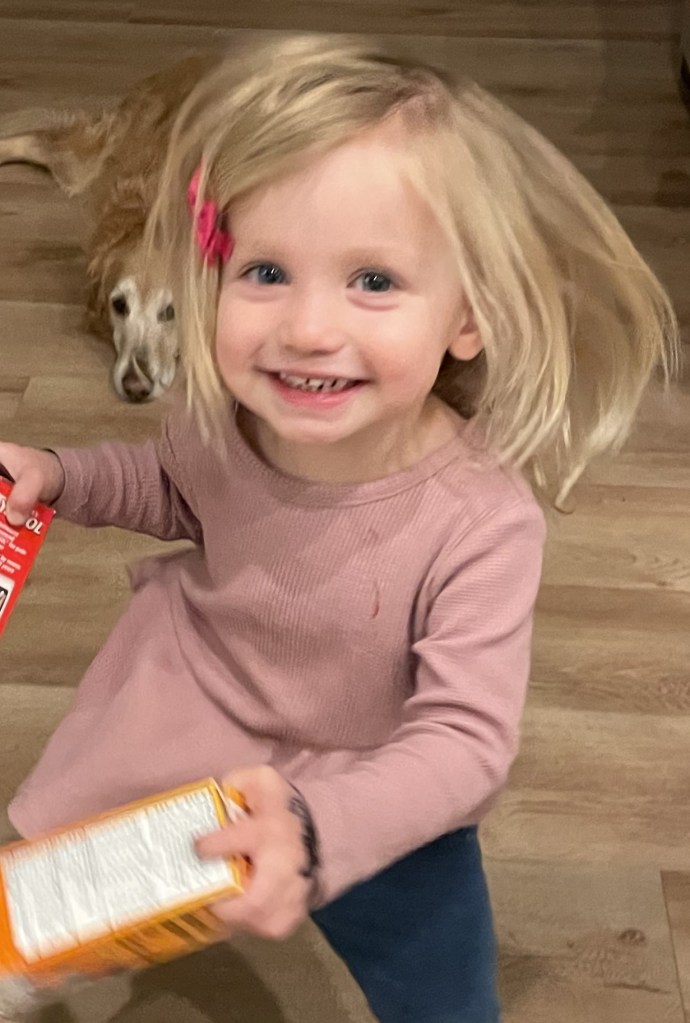
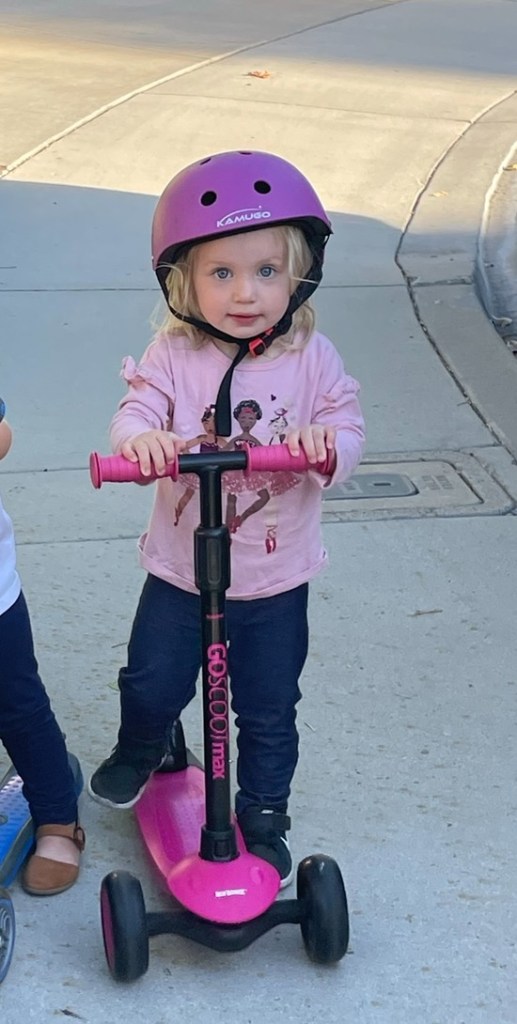
These days, I take lessons on thriving from my two-year-old granddaughter, Emmy. She spends a lot of time outside–observing every blade of grass, playing ball by rules she makes up, singing nonsensical ditties, skipping down sidewalks, riding her scooter, and laughing uproariously at silly things like hitting a ping pong ball against a ceiling fan. She also naps in the afternoon, awakening with a smile and ready for a snack. Boredom is absent from her repertoire. The more I age, the wiser it seems to imitate her embrace of every moment and engage in these non-utilitarian activities.

But how do we serious-minded adults go from surviving to thriving? Well, it may require some effort, but luckily, no special training, equipment, or clothing is needed. The main obstacle is procrastination which admittedly is daunting for some personalities. Essentially, we need to lead a more “natural life” according to experts Tessa Bielecki and Fr. Dave Denny in their new podcast, “Fire and Light.” This translates into getting closer to the earth, looking at the night sky, and creative activities. Listen here for more of their valuable insights: https://sandandsky.org/welcome-fire-light-podcast/

As a wisdom seeker, dedicated to thriving, not merely surviving, I will also offer my two cents about this topic in forthcoming blog entries, centering on the active verbs: listen, read, write, walk, create, connect. Will tapping into life-long inspirational gateways and sharing them with others transform our wounded and anxious culture? I can simply try and then offer a few prayers of supplication.

Hopefully, some of you are lucky enough to have a two-year-old take your hand and say, “Are you ready? Come on!”

Little Gifts/Big Meanings

Today is New Year’s Day, the eighth day of Christmas. On my walk around the neighborhood, I saw bare and bedraggled Christmas trees laying in the gutters and wanted to weep. As most people know, I am big on celebrating all twelve days of Christmas, culminating with an Epiphany party on January 6th. I know I am way out of step with our culture but I don’t care! I remain steadfast in my ways and am cheerfully keeping the yuletide going strong at my house.

I have had so many wonderful celebrations and illuminated moments this Christmas season! Besides seeing “The Nutcracker,” “A Christmas Carol,” and two Christmas concerts, I had fabulous family celebrations, Christmas teas with friends, adventures looking at lights, and a small faith group gathering where we prayed the O Antiphons together. All were amazing gifts to warm my soul!

Someone asked me to name the best part of Christmas so far and that was easy. For me, the very best part of Christmas is gift-giving which I believe is one of the most pleasurable activities of life. Confession: I am one of those annoying people who actually loves to seek, find, wrap, and give presents for every occasion. I especially like small, handmade gifts and spend quite a few hours dreaming up something I can make and give. This used to be a necessity when I did not have the funds to properly shower people with presents. Now this activity is a novelty since everyone immediately buys everything they could possibly need or want at Costco.

Handmade gifts represent an investment of time and thought. They speak heart-to-heart and seem to connect with a simpler way of life many long for these filled-with-expensive-technology days. This year, I made aprons for all my daughters and sons-in-law, and bracelets made out of antique buttons for my friends. I prayed over every stitch, thinking of each person as a blessed gift bestowed freely by y unconditional love. In the end, my fingers and eyes were sore but my spirit was uplifted by not only the smiles and expressions of appreciation I received but also by the joy of creativity. Such is the reciprocal nature of handmade gift-giving!

At this point in my life, I do not need a thing for Christmas or my birthday. Yet, I am a big proponent of gift-giving and receiving. Ultimately, we all need to become less self-absorbed and more altruistic. Becoming more creative about what that means is key but I try to make it easy for my friends and family.”Spend quality time with me,” I tell them, like a picnic at the beach, concert/theater tickets, long walks, or short day trips. Time equals timeless memories no amount of money can buy.

Right before Christmas, my friend Mary and I went to the Mission in San Juan Capistrano for their annual festival of lights. As we strolled around in that familiar holy place, amidst the ruins, I was transported by what I can only describe as a heavenly river of healing grace streaming from so much history, including our long, loving friendship. Tears, the holy water of daily life, ran down my face as I thanked God for gifting me beyond words with the knowledge of the true meaning of the Incarnation. A split second later, Mary and I were laughing like hyenas over something ridiculous–for which I was equally grateful.

May the new year bring many little gifts with big meanings to your lives!