

I am experiencing a series of epiphanies. That is, sudden manifestations of the divine in the ordinary. It’s been happening since the beginning of 2026, during the last of the twelve days of Christmas. As I mentioned in the previous post, I intentionally celebrate the Christmas Season through the Epiphany, the Visitation of the Magi, on January 6. Now that we are officially in what liturgically is called “Epiphanytide,” my attention span dial is set at its highest level, and little glimpses of gold, frankincense, and myrrh peek through the torrent of darkness that bombards our world today.
The first epiphany, here in California, was golden. Amidst the gloom and rain that descended on us right before Christmas and through the New Year, the sun poked brilliantly through the clouds and has shone down like butterscotch ever since. Our usual brown hills turned bright green, and the succulents in my backyard went crazy. While on a contemplative walk on the beach, the dazzling display of sunlight made the water luminous. Everyone from dog walkers to tide fishermen to cellphone starers looked as though they wore halos, bearing a divine presence. A gift, whether they knew it or not. Then a rainbow appeared. Where is the gold? Right inside of us.
The second epiphany happened on January 6, the evening of the Epiphany. A group of friends gathered in a host home for the annual Ritual of the Magi, which involves chalking the initials of the legendary Wisemen, along with the date, over the front door. This year, when I lit the charcoal and placed the frankincense in the antique brass burner, an enormous flame sprang up, accompanied by billowing black smoke. Fearing the smoke alarms would go off, I doused it with water and started over again. Soon, the pungent aroma permeated the room and wafted over the chalk, water, and oil. “It smells like church in here,” remarked someone. Indeed. The smoke rose, disappeared, and blessed the household, us, and streamed palpable love from our little group out into the world.
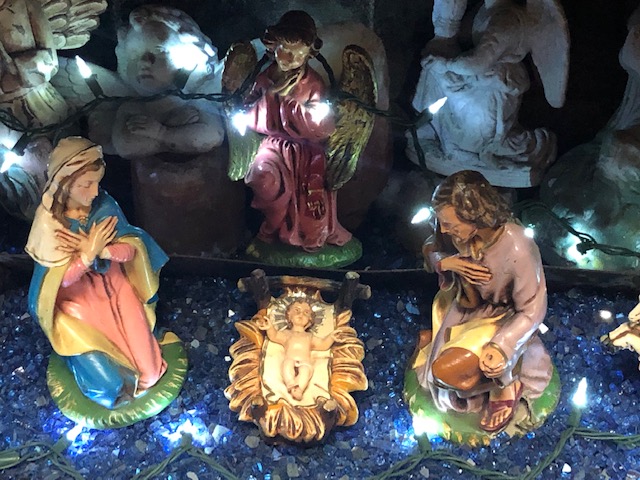
The third epiphany, sad to say, came from my distress over the violence in Minnesota, my home state. Something seems to be forever dying in me as I join in the endless mourning for all innocents killed in the name of peacekeeping. The gift of myrrh, presented to the innocent baby in the manger, was a foreshadowing of his ultimate horrific death by execution. Somehow, this is strangely comforting. The Son of God knows our anguish, our suffering, our need for a dose of reality. In my epiphany awakening, I realized that ultimately, the way we exit this earth does not matter so much as what we do with the time in between–how much we love, how much we try to convey to others that they matter.
I have chosen “forgiveness” as my word for the year 2026, which has already been challenging. What can I say? After listening for months, forgiveness echoes in my head as the way to reconcile death and life, not only during this Epiphanytide, but for the remainder of time I have left.
 Seeking Wisdom