
O ROOT OF JESSE, COME, give us insight and appreciation for our common ancestry, a timeless unification of the past, present, and future; help us receive the gift of every moment.

O ROOT OF JESSE, COME, give us insight and appreciation for our common ancestry, a timeless unification of the past, present, and future; help us receive the gift of every moment.
O ADONAI, Lord God, COME, guide and protect us from worshipping at the false altars of egoism and selfishness; call us out of ourselves and into the service of those in need.
Nothing gets me more in the mood for the Advent and Christmas season than the hauntingly melancholy sounding hymn “O Come O Come Emmanuel.” The words fill me with wonderment, especially knowing that the verses are from the antiphons or short prayers, used in the evening of the last days of Advent leading up to the celebration of the Incarnation. O COME is a pleading for the Christ to break into our daily lives, shake us up, change our hearts, and heal our needy world so full of injustice.
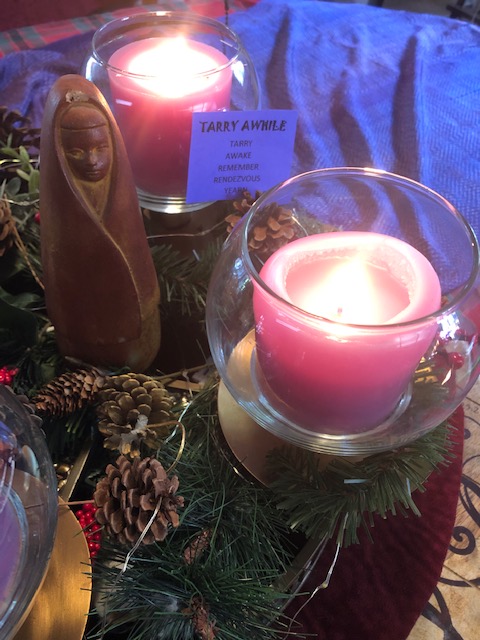
Going back to my Advent word, “tarry,” the yearning becomes more forceful as the last seven days progress. Each of the O Antiphons are names for Christ and each carries a powerful symbol of hope and redemption. In the Liturgy of the Hours, the O Antiphons are a prelude to the Magnificat (Mary’s magnificent plea to God to come and establish justice on this earth). Ancient biblical imagery is drawn from the messianic hopes of the Old Testament to proclaim the coming Christ as the fulfillment of all human desires.
Oh! You might be saying, the “oh” indicating the small surprise you feel when you realize you have heard a word or idea you did not know, have forgotten, or knew superficially. In this case, the Oh is an exclamation of wonder, amazement, even adoration when something or someone overwhelms or touches your whole being.
Traditionally, the seven O Antiphons are: O Wisdom (December 17), O Adonai (December 18), O Root of Jesse (December 19), O Key of David (December 20), O Daystar (December 21), O King (December 22), O Emmanuel (December 23).
I invite you to tarry over the O Antiphons with me this year during your daily rendezvous with God. Read them silently, read them aloud, sing them, repeat them often. No half-hearted Ohs, please! These are meant to uplift us from gloom and doom and center us totally on the emerging of the Christ within not only at Christmas but every minute of every day.
Perhaps some of you may want to write your own antiphons and share them with all of us. Enjoy this last week of Advent!

O WISDOM of our Creator God, COME and teach us to know you disguised in every flowering cacti, every living, breathing soul.
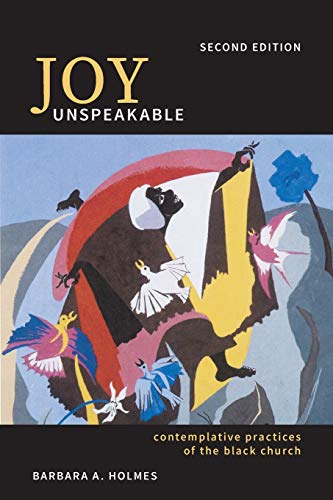
I love the word “tarry.” It means to linger, which is a simple definition of what I have come to understand as contemplative living. This word has followed me around since I was very young, popping up from time to time when least expected. Some months ago, while outlining the book Joy Unspeakable (Barbara Holmes) for my study group, there it was again, leaping out of a page in a one-liner I could not miss. I held the word in my mind’s embrace, the resonance growing, knowing that “tarry” would be my word for Advent 2021.
Listening to the silence in between the noise of so much November chaos, still acclimating to my retirement from ministry, I realized delightedly that “tarry” had become a reality for me. No longer did I have to sigh and yearn for the possibility of “some day.” My spirit soars with gratitude while my soul cries out: I can tarry all I want now–what a revelation!
So this year, I did not write an Advent book for our community. I did not do a daily blog sent to thousands by text message. I did not do a weekly podcast or an Advent evening of prayer as in the past. Instead, I am tarrying over everything I choose to do: writing, reading, walking, listening, cooking, noticing, accepting any and all offers for personal contact. I am no longer “too busy.” My calendar is deliciously free of engagements!
People always ask me what I would do when I was retired, seemingly fearful that I would wither on the vine or be bored. I knew that would never happen. My heart’s desire has always been to write, do retreats, and spiritual guidance. How liberated I feel, how free, how grateful to have this time of holy leisure, to tarry awhile, at this phase of my life. And best of all, deep within, the Taproot surges with renewed energy, the voice of the Holy One telling me to share the wisdom I have learned from being on a serious spiritual journey for forty years now. As always, I listen to the tapping, the call, the little voice within.
On the Second Sunday of Advent (December 5), some friends gathered at the home of Jack and Gina Robertson to tarry awhile with me as we reflected on the Season of Advent in a very personal, intimate setting. Like the early Christians, we became a “house church” simply united by the trinitarian love flowing effortlessly through our lives. We had music, readings, reflections, journal prompts, and personal sharing. The stream of love and grace in that small group flowed out from our little corner of Dana Point to the community of a world in need.
Throughout the remainder of Advent, Christmas, and into the New Year, I will be sharing my usual reflections online and offering rituals and small group gatherings. My hope is that those of you SEEKING WISDOM will find some inspiration and comfort in my efforts to humbly share what I have learned.
HERE’S THE TAKEAWAY FOR ADVENT THIS YEAR:
INTRODUCTION: “Not many of us know how to be holy.” Kirk Franklin, Gospel Singer African worship experiences are contemplative because a) they create an atmosphere for communal listening and responsiveness to God; b) they impact the ethos and value system of a community; c) they heal infected social and psychic wounds.
THAT OLD SHIP OF ZION: Africans brought to America on slave ships had to construct their own “Ark of Safety.” This strengthened resolve and survival skills: “crisis contemplation.” “Inclusion is not just a racial issue.” Barbara Holmes Class distinctions broke down but gender and sexual identity distinctions did not–still struggling with these.
I DON’T WANT TO CRY ANYMORE: African worship experience – they have “forgotten how to lament.” Tired of it. Don’t want symbols of Good Friday anymore. Rev. Cecil Williams took down the cross in his church so it wouldn’t be a constant reminder of Christian death ritual.
Question from Barbara Holmes: Have we taken down the cross in our individual hearts and in communal worship for the same reason?
CONTEMPLATION IN PEWS: Took Barbara Holmes a few years of experiencing different liturgies to realize that freedom comes in many forms. Freedom denied in the workplace was being recreated in storefront churches as holy dance, rhythms of proclaimed word, sense of transformation, sense of awe/expectation, weeping, shouts, and silence. All contemplative practices were “hidden in plain sight.” Barbara Holmes’ life was forever changed by contemplation in the pews. She became a minister “with a light around her,” because of these communities.
TRANSOFRMED BY THE DANCE: Indigenous communities formed on the notion that worship is holistic, cannot escape involving the body and they celebrate this fact. Communal dance, choral dancing, movement styles all typical expressions of people offering their bodies for praise. Authenticity seldom judged – not controlled. The “flow of God” is manifested uniquely in each of us so no need to control or intellectualize it. Just let it happen!
How does this compare to our experiences of liturgy?
SUFFER THE LITTLE CHILDREN: Children are encouraged to “play church.” They enter into the liturgical experience of shouting, dancing, etc., as a natural activity. What do we do to our children at church?
MOURNER’S BENCH: THAT’S NOT IT: The place where sinners or the unsaved and uncommitted prayer for God’s anointing; a public portal into participation in communal contemplative practices; a mediation of spiritual powers far beyond individual’s control. Fakes are called out: “That’s not it!’ Is this like the RCIA dismissal experience? How does it change a community to witness such a place?
CONTEMPLATING BAPTISM: Water and the Spirit ritual comes alive in the Pentecostal Church; people emerge from the water speaking in tongues and totally changed. The BC adapted well – had river rituals of cleansing in Africa; infants baptized in connection to the ancestors. Are our sacramental rituals too tame?
ECSTATIC SINGING: OPENING THE HEAVENLY DOOR: Africans crossed back and forth “beyond the veil” evidenced by songs of praise spontaneously raised by anyone who was moved; a result of the in-dwelling of the Spirit, creating an atmosphere of transcendence; singers were “anointed” by repetition of verses; contemplative as deep listening abides between every note and stanza. How does this compare to the music in our church?
PRAYING IN THE CLOSET AND IN THE PEW: Black experiences of “shut-ins” where people would stay and pray all night provided a permeable boundary of life/death; this allowed for a cloistering: 1. tarrying (waiting expectancy), 2. a place for contemplation 3. a communion with God for those seeking union; stressed vocalizing prayer; BH wants to revive this in the BC.
A CASE STUDY: HOWARD THURMANS’S CHIRST TODAY: Thurman’s community in SF, an eclectic congregation, still open today; quiet, familiar music; Scripture readings; guided meditations on forgiveness of self/others; fluid names for God; embraces; great food afterward. BH went to experience this in 2002/
SHIFTING THE EPHASIS IN WORSHIP: From preacher/star to empowered congregation – this is where the BC needs to go if it is to sustain itself, acc. to BH. Shift addresses burnout of pastors, prevalent abuses of power by clergy, lack of spiritual initiative from pews; might not be possible in the institutional church–may have to emerge from small committed groups. BH lists phases (see end of chapter)
SEEDS OF HOPE (A Summary): Who shall we bless the past and pass on the contemplative aspects she outlines: through sorrow, strengthened by activism and postcolonial bib. interpretation (next chapter).
What are the seeds of hope you need to sow?
This week’s gathering at Marie G’s house was small but stimulating. Thanks to all who could be there and to Marie for hosting so graciously. We have not gathered to discuss this book in a long time so it was wonderful simply sitting in our circle of friends once again. For those of you who missed, here are some highlights and some food for thought.
The vividness of Barbara Holmes’ descriptions of slave holds, plantation practices, and hush arbors in Chapter 3 evoked a deep sense of sadness in me, the same one I often feel when I read about the Jewish Holocaust or the many pogroms (some still occurring today). How does this happen? Why does racial hatred continue to spill over into our streets and our conversations? While Barbara does not directly attempt to answer these age-old questions, she does give an interesting explanation on how they coped. She calls it “crisis contemplation.” This is strangely comforting to me. Through what she calls “inversion,” the African captives’ unthinkable pain and suffering formed a bedrock foundation of inner, spiritual strength. Those who survived were able to turn inward somehow. The whip, the ring shout, the circle dance of the auction blocks, and the hush arbors of the plantations, called the diverse strangers into contemplation of their primal knowledge of divine presence that had begun in their families and villages. Unity beyond language barriers and customs evolved out of their shared experience of horror and pain.
Our discussion eventually ended with several questions. What can we do? How can we, a small group of affluent white women, change or transform the current climate of racism? It all seems so hopeless sometimes to “just pray” about the situation. I shared that my experience with contemplative prayer has helped in this regard. Tessa and the other Carmelite monks of the Spiritual Life Institute taught me long ago that a contemplative, recollected life truly becomes the the “Real Presence” of Christ in this world. It is the Beloved who emerges from me when I can remain centered, attentive, present to the beauty, truth, goodness of every ordinary moment. As Barbara Holmes says in this chapter, “It is only radical love that can transform this situation.” My intention is to always be in that flow, every day, every moment, for it is the Christ in us all who holds the world together. The empathy, tears, compassion, smiles, joy in the little things, all of the stuff of our lives, allows that love to flow endlessly into the world. Like the monks of old who dedicated their lives to praying for the world, I can use my life to the same purpose as an undercover agent for radical love. What do you think? Please leave a comment!
FYI: Our next meeting is scheduled for Monday, October 18 at 9:30 AM at the home of Marie Ryan.
PLEASE MARK YOUR CALENDARS: The annual women’s retreat is coming back NOVEMBER 6-7. We will have a different environment and schedule this year as we adapt during Covid. More details to follow.
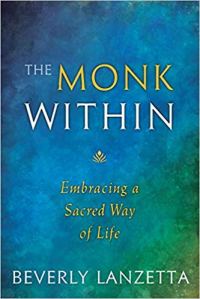 A new year has begun and with it, our deepest aspirations to continue spiritual growth in our beloved Sophia Circle. We have decided to read Rosemary Lanzetta’s book, The Monk Within, in order to continue to expand our understanding of the interspiritual movement that seems to be overtaking conventional, institutional ways of thinking. Come to our next meeting on March 18th, at Mary Kay’s house as we continue our quest for companionship and contemplative awareness.
Here are a few questions to ponder:

1. Early on, Butler Bass informs us that neighbor means
“near dweller” (p. 196). Do you know many of your
neighbors? Who are your neighbors, and what is your
relationship with them? Who has been a neighbor to
you in the wider sense of the word?
2. “Neighborhoods need spiritual gathering places as
much as they need schools and shops. Yet God does
not live at the neighborhood church” (p. 196). What do
you think the role of the neighborhood church is, and
what should it be?
3. Butler Bass brings up the idea of connecting with thousands
of people daily via media and social media (p.
205). Do you live in technology neighborhoods? What
are the challenges of those neighborhoods?
4. “The world can no longer afford tribes intent on purity
who believe God blesses only them” (p. 220). How does
Butler Bass distinguish among tribes, clans, and open
tribes? Who might disagree with this statement?

We had a lively discussion of Chapters 4 and a little bit of Chapter 5 at Joyce’s home recently.I began the gathering by having everyone listen to a Rob Bell interview with Diana Butler Bass on is podcast in 2017 when the book had first been published. Here is the link:
Here are some of the highlights of our discussion that I am still pondering. Feel free to add yours:
Only two out of seven present knew stories of ancestors. This both surprised me and also confirmed what Diana Butler Bass writes about in the Roots Chapter. We have information at our fingertips about ancestry but we are NOT connected to stories or specific people. I am the “storycatcher” in my family, having written three books based on ancestor stories: The Photograph, a children’s book about my maternal grandmother based on a charming story that was often told by my mother and her sisters; Remembrances of a Storycatcher, a family history I wrote for my daughters and their families; and Forgiveness, a novel I wrote about my paternal grandfather, which has yet to be distributed to the family. Yes, I guess I have always been “ancestor-crazed.” I have had a wall of very old photographs lining my stairway from both sides of the family that I love looking at and remembering. They ground me. What is your connection to your ancestral story?
The point was made that some people just have no interest in connecting to the past in this very personal way. We need to be okay with that. Sometimes the past is full of dark memories, shadows, fears, unpleasant to remember. Sometimes people are not worthy of our adulation or remembrance. Do we canonize the past? How can we be objective about ancestral stories when they are embedded in time and personal perspectives? Is memory ever accurate?
God is in our roots. We have spiritual DNA. DBB is insistent that connecting to the past is extremely important for spiritual growth. When we know from whom we came, their spiritual history, we not only honor the past but we understand why we think, believe, and practice our faith today. Most of us were in agreement that the concept of the “communion of saints,” has a lot of meaning and power, especially when we think of our deceased relatives. Comments?
Time is not linear; there is a great “web of belonging” that unites us all under one genealogy if we go back far enough. DBB says all family trees intersect and thus we are all related. This very concept ought to transform how we think about and treat one another; no divisions of race, creed, ethnicity, etc. The unity of reality has been the “minor key” of religion and theology. Why don’t we emphasize this? Why don’t we hear more about our connections from pulpits across our world? We had a very passionate discussion of these questions. Feel free to add your comments!
We began Chapter Five on Home but didn’t get very far. Our September 10 meeting will begin there. NOTE: We will begin with lunch at noon that day. I will send an email reminder. Meanwhile, put your feet on the ground, breath in deeply, look at the sky and ask ancestors to bless and pray for us!

 Seeking Wisdom