Thoughts After Our June Gathering

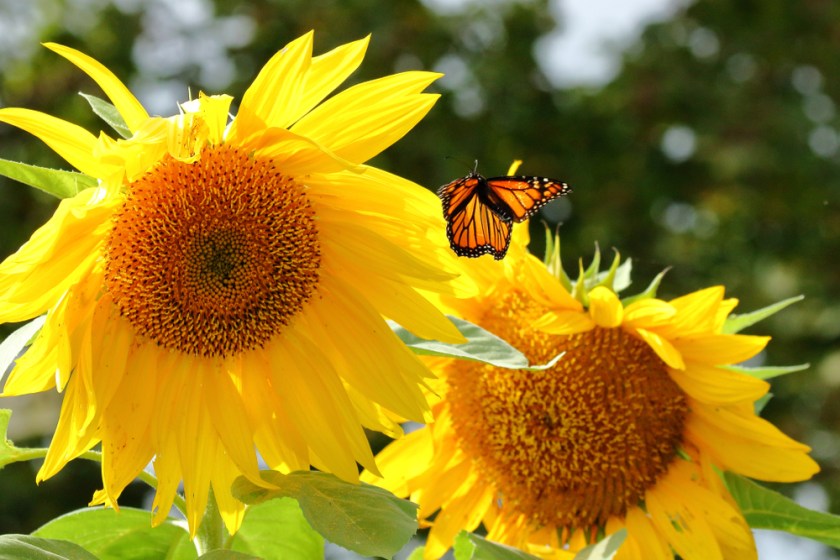
shutterstock_1126144433The June morning we gathered at Mary Kay’s house was warm and luminous.  The first thing I noticed as I walked to her door was the gargantuan sunflowers that towered over my head, nodding a greeting. Some were at least ten feet tall with leaves the size of large dinner plates. They were randomly planted, MK told us, a little surprise of nature. Ah! What a great way to start our discussion of Chapters 2 and 3. The ground beneath our feet is teeming with a life of its own, nourished by water, under the beauty of the California sky.

The chapter on water brought forth many experiences with the riparian zones of the Colorado River, the Mississippi, the Hudson, the Snake, and even the River Gave in France. The collective sense was one of a rushing movement, always changing. “You can’t step into the same river twice,” was the spiritual message, re-learned with each visit. We lamented pollution, the shocking statistics that Diana Butler Bass wrote about.  In the discussion of the Spiritual Quest for Water, we shared our own stories of transformation, some just now occurring. Marie Ryan recalled her experience of the healing springs of Lourdes, France, when she was in her early twenties, for example. We also talked about favorite Scripture stories – so many about water, so many about healing. We all concurred that sometimes simply going to the beach is the best medicine.

The careless way the human race has taken this great resource for granted occupied a great deal of our discussion. The call to social justice is strong. Why, then, do we not hear more about what we can do as a faith community to raise consciousness, to reverse the threat to water? Our lamentations about the lackluster tone of Sunday homilies were loud and collective. Many questioned why Catholics are so complacent, especially with Pope Francis constantly calling us to care more for creation. Perhaps because the issue has been politicized and thus controversial? The clergy does not want to ruffle the feathers of parishioners who do not believe in global warming? Whatever the reason might be, the group stood firm that something must be done, citing the many churches all over the country that are responding by digging wells, conserving energy, and raising consciousness. Grassroots level activism may be the only way. Sadly, we left it at that and had to move on.

The discussion of the next chapter, The Sky, continued in the same lively manner as the previous. The mysteries of the invisible yet powerful atmosphere, of cloud formations, wind, stars, dark matter, left us spellbound. We talked about why people are afraid of believing in evolution, preferring to embrace the literalism of the Bible’s creation stories, especially since the Catholic Church has long since been a pioneer in advancing the secrets of the universe. Is science still at odds with religion? No one in this enlightened group is stuck in that quagmire. We see no problem with the “new cosmology,” that, it turns out, isn’t so new. We were all happy that Georges Lemaitre, a Jesuit priest who proposed the big bang theory, along with Teilhard de Chardin (who was actually silenced at one time), have both been esteemed by modern popes as advancing scientific thought in this regard.

Air pollution was lamented by the group. What we can do was pondered. The activists among us have specific ideas; others seemed more pessimistic that no matter what we do, the resistance on the far right is too great. Personalizing the topic, some of us suggested that we think about our grandchildren. What are we doing to leave the planet a better place? The bigger question, to me, is how do we become more enlightened about faith and science? How do we give the next generation a deeper context for the challenges of the modern world so that they can make faith-filled decisions about the ground, water, the sky?

As Faith Formation Director, I go back to how to fundamentally change hearts and minds. To me, this is about cultivating earthy mysticism within the consciousness of the young, something I believe they are deeply longing to find in our Church. We simply MUST get away from the patterns of “vertical faith,” of thinking and talking about God “in heaven,” rather than in the air we breathe, the water we drink, the ground beneath our feet. Images of God are often formed in childhood and unless we intentionally grow, allowing our language to change along with these images, there is little hope for personal or global change.

Sadly, many Catholics (and not just young people) do not know what the Church teaches about how we interpret the Bible. They are swimming in the waters of evangelicalism in America and have unconsciously taken on their fundamentalist beliefs about Scripture. Some don’t even think about it. Faith is something they want for their families because it makes them feel good. They don’t ponder the deeper mysteries or try to reconcile their worldview with the Creed.  Many leave our faith because they don’t feel connected. And so, on it goes. We have a rich gourmet meal for them but we don’t lay the banquet or invite them very well.

I’ve been spending the greater part of the past ten years educating young parents in our Family Faith Formation gatherings. Some are thrilled to have the lights turned on for them. Some look at their phones and sip their Starbucks the whole time. I want to yell at them: “Pay attention! Your life depends on this!” I raise my voice. I tell jokes. I say outlandish things sometimes just to wake them up. The ones who are listening laugh and give me a knowing look. Others don’t even notice. Yet I persist because I know I must. But you cannot force someone to the altar of enlightenment and make them worship. The hungry will be fed. The thirsty will drink. As a wise mentor once told me, “You can sow the seeds of faith but you are not allowed to water them. That’s the Spirit’s job.”

I am so grateful to have like-minded writers, like Diana Butler Bass and so many friends in our Sophia Circle, that continually act as my spiritual watering cans!

Leave a comment, question, or affirmation. I like to know that someone is reading this! On to the next meeting: August 6th – location TBA. We will discuss Chapters 4 and 5.

Peace be with us all on the path of enlightenment. . . DC


Chapter Three: Sky

shutterstock_335913692Here are some more questions to ponder for this chapter:
  1. Read aloud the whole paragraph at the top of page
    100 that begins, “The Psalmist’s words, ‘Our God is in
    the heavens,’ actually unveil far more complex spiritual
    possibilities. Unlike the ground and water, sky is
    beyond our comprehension.” How does Butler Bass’s
    lyrical writing serve the subject matter she is sharing.
  2. “To say that God is in the sky is not to imply that God
    lives at a certain address above the earth. Instead, it is
    an invitation to consider God’s presence that both
    reaches to the stars and wafts through our lives as a
    spiritual breeze” (p. 103). How does this statement
    illustrate a shift from a vertical theology to a grounded
    sense of God among us?
    3. Hildegard of Bingen wrote almost a thousand years
    ago, “If we fall in love with creation deeper and deeper,
    we will respond to its endangerment with passion”
    (p. 123). Today we see that numerous people (faith-based
    groups among them) are engaged in the largest
    social movement in human history, addressing issues
    of climate change. What do you make of this? What
    role could you play here?
    4. “The ground is the earth’s body, water its lifeblood, and
    the atmosphere its lungs” (p. 114). How has this book
    helped you frame climate change from a faith perspective?
    What motivates and inspires you to face the crisis and institute changes? How do you strike a balance between truth and hope?

Chapter Two: Water

“The river is within us, the sea is all about us.”

I have lots of notes on this chapter and will share them with all of you when we meet on June 20th at Mary Kay’s house. To get you going, though, I copied these great questions off of Diana’s website. If anyone has others, please add them to the comment section at the bottom of this page.

1. “The place where water and land touch is one of the
most significant geographies for our life on earth”
(p. 68). What do you think Butler Bass imagines from
both a scientific and a faith perspective when she
describes this riparian zone?
2. “Ancient biblical tradition suggests that waters—wells,
springs, oases—are also places of renewal, hospitality,
and spiritual vision, where human beings see God and
God’s blessing” (p. 73). What is your favorite water
story from a sacred text? What role does water play in
your faith tradition?
3. Butler Bass predicts that “our descendants will surely
interpret the spirituality of water in starkly different
ways than we do now” (p. 77). What examples do you
know of in which faith communities are collectively
addressing water shortage issues?
4. “This is a vibrant spiritual vision—knowing God as
water is not only about clarity and flow, but consists in
great part of the muddiness of our own lives” (p. 91).
How has God come to life for you in flowing, still, and
muddy waters?

Yesterday’s Discussion

Eight of us met yesterday at Joyce’s house to discuss Chapter One and it was a lively exchange of ideas. Here are the summary points. Let’s get a discussion going! Any questions or comments are welcomed.

  • Panentheism, seeing all things in God, God in all things, does illuminate the world in a different way and is challenging core beliefs. To some, this concept seems like what other Christians have dismissed as “New Age” thinking. However, this viewpoint has always been part of mystical theology, Franciscan and Jesuit spirituality, and permeates the writings of many saints (like Hildegard of Bingen, Julian of Norwich and others). I was first introduced to the word and its meaning by my Carmelite friends at the Spiritual Life Institute in the 1980’s and found myself falling in love with what they called “The Real.” The “soil-y” God of the Incarnation was so personal and intimate, just what I was searching for. This core belief has been with me ever since and has freed me from the limitations and constraints of the God of my childhood.
  • We were reminded how powerful language can be in the shaping of images of God. Some are struggling with thinking of God as “in the dirt,” and calling ourselves “animated dirt.” Some like the word “soil” better.
  • Many were touched by the story of meeting the farmer/author who fell to his knees in awe in the fields.
  • We had a deep discussion about “the world as the body of God,” and how it shifts our perspective from God residing somewhere in space to right under our feet.
  • The second Genesis story, humanity formed by the combination of soil (Adam) and Eve (life) was poignant and easily accepted. No one in the group takes Genesis literally. Rather, it is embraced as a “liturgical poem.” (Brueggemann)
  • I recommended the movie, “Dare To Be Wild,” which I watched on Amazon Prime recently. It is the story of Nancy Reynolds, who advocates the grown of “wild gardens” rather than manicured landscapes. Marie had just spent Mother’s Day visiting the Huntington Gardens and Barbara was at Sherman Gardens in Corona del Mar. I was struck by how communing with the beauty of nature refreshes our souls. Isn’t that the natural result of “wasting time with God?” To me, this is the ultimate act of adoration – God with us – all around us, the ground of our being.
  • We all loved the concept of the “garden church,” and want to go to San Pedro to see the “living sanctuary.” Road trip, anyone?
  • I shared about how difficult I find soil regeneration in California. No matter how much I add mulch, renewing the soil isn’t easy, as the author says. Many of us still love our flowers and grass but some of us are trying to find other ways to tend to our yards using drought-resistant and native plants. We all resonated with taking care of the land and how politically divisive this has become. Even Pope Francis has been severely criticized for his outspoken views on caring for the Earth. This group is definitely on his side!
  • Discussion about soil, sin, and salvation was serious and deep. We talked about the shame many women carry, being blamed for the original sin of Eve and how the word “dirty,” is connected with sexuality (dirty books, movies, thoughts, etc). Women are thought of as unclean or “dirty” when they experience menstrual periods every month. A woman has been called “soiled,” or  “dirty” if she is single and not a virgin. The image of Mother Mary as “immaculate” has been used as the perfect image of what a woman should be. (By the way, men are never viewed in this way even though there are some dualistic views of what it means to be chaste). Is this the reason why we don’t care for the land? No one was really sure of that but it’s something to ponder.
  • Regarding “Holy Dirt,” Joyce told us that she had been to Chimayo, New Mexico. Her recollections were about the people and the many crutches, glasses and other symbols of healing that were on the walls. I told them that I have been to the “House of Prayer” in the woods in Minnesota. It’s on the campus of St. John’s University in Collegeville and definitely a mystical place. The earth heals! What a beautiful mantra for us all.
  • “Earth is for real” was tested out when we ventured into Joyce’s beautiful backyard with its plants, rocks, soft warm grass, and flowers. This is the pathway to experience faith in new ways for “God is here. God the Earth-maker, God the gardener, God the Ground of Being.
  • We moved lunch outside on the patio and had the most delectable chicken casserole, salad, and chocolate cupcakes for dessert. No one wanted it to end!

We decided to try and read and discuss Chapters Two and Three for our June meeting. Date and place TBA. Watch your email.

Grace and peace and the warmth of the Earth be with us all. . . .

Chapter One: Dirt

I grew up in Minnesota, a state that has some of the best farmland in the country. Before I moved to California in my twenties, I didn’t know that dirt was any other color than the black, alluvial soil that I had smelled and played in all my life. Although my family of origin did not farm, I was surrounded by friends who made it their livelihood. We always ate the crops that they shared with us, homegrown and seasonal. Unlike Diana Butler Bass, I knew exactly where food came from.

This chapter on dirt stirred a lot of memories for me. Although I truly enjoy the many benefits of living in a city by the ocean, I also love the wide open spaces I knew at such a young age and the luscious taste of a homegrown tomato. From the first rented house we had in Santa Ana, I have planted home gardens. Sadly, most of them have not lasted. As Diana says, “the real work of gardening is in the soil,” and, I might add, water, two resources in short supply in Southern California. Still, I am determined and have tomatoes, peppers, and lots of herbs growing in my backyard today.

I have often joked with my daughters that the reason I still do my own housework and gardening is that I don’t want to lose connection with the dirt. I know they think I’m a bit crazy or maybe just a glutton for punishment or even worse, an OCD control freak about my own house and yard. But to me, dirt is an inextricable part of the spiritual life. I learned this both by experience and from my most influential mentors many years ago. And so reading this chapter was just a big head nod from me.

Some nuggets to ponder from this Chapter:

  1. Where Is God? and the Dirt –Panentheism – The idea that God is with or in all things; recognizes the distinctions between things, at the same time that it affirms the indwelling force of spirit (typically called God) that draws all things into relationship with all other things. “God is not a tree; a tree is not God. But God is with the tree;  and the tree is with God.”  Do you resonate with this concept? Agree or disagree? Why? How has either accepting or rejecting this idea impacted your life
    1. Diana says that Western religion “baptized theologies that distanced God from the dirt and emphasized human lordship over the land. The soil-y God was left to mystics, monks, women, and mostly the poor–people on the margins of the religious community whose orthodoxy has always been suspect and whose institutional power was negligible.” (39)  What has been your experience?
  2. We’re Dirt – Diana writes about the two creation stories at the beginning of Genesis, in proof that “we’re dirt,” a subtitle. Adam and Eve’s names mean “Soil and Life” in Hebrew. They marry and their union produces the human race. We are “animated dirt,” having received divine breath. “We were made from living ground and to living ground we will return.”  (Reminiscent of Ash Wednesday) What is your response to her take on the Genesis stories? How does it feel to be called animated dirt?
  3. Losing Eden–Diana expounds on how and why we are disconnected from the soil and builds a case for why we should try to get back to the garden, even if we live in the city.  She says we should view the earth as the body of God, not separate from God. So. . .What do you think? Is God, indeed, in the dirt?
  4. Soil, Sin and Salvation – Diana says she thinks one of the reasons we don’t care for the land as we should is because somewhere along the way, there was a linguistic connection between dirt (being dirty) and sin.  The language about the land has aided and abetted its misuse. It’s time to reclaim the dirt! Would you agree? How has this theological description of “dirty” impacted your self-image? Image of God?
  5. Holy Dirt – This section is about Diana’s experience with the healing powers of chili peppers, grown in the dirt of Chimayo, New Mexico, the “Lourdes of North American.” What is your reaction to this story?
  6. Earth Is For Real – “Finding God in the dirt allows us to experience faith in new ways.” Has this been true for you? How?


Some Background On This Book Choice

I first encountered Diana Butler Bass when I listened to an episode of one of my favorite podcasts called “The Deconstructionists.” As many of you know, I am currently spending quite a bit of time listening to why millennials are disenchanted with the institutional church. The two young hosts of this podcast, John Williamson and Adam Norlach, give me hope for the future. They are big thinkers, respectful questioners, and giant sponges for learning. They are both from the evangelical Christian tradition and both are rethinking all that they had previously just accepted as Truth. Kindred spirits, they began speaking about their inner journeys and discovered that many other people were on similar pathways.  A dream come true, they began inviting writers, teachers, and speakers from all faith traditions to a podcast conversation which they produce each week. I could go on and on about them, and the podcast, but won’t right now. Suffice to say that they were the ones who introduced me to Diana Butler Bass.

Diana (I think of her as a friend though we have never met), had my full attention within about 10 minutes of listening. Her voice held conviction; her ideas echoed deep because Diana is interested in the same things that root and ground me: incarnational spirituality.  I immediately purchased this book and was captivated by her personal experiences and storytelling style. And when that happens to me, I want to share with my friends as a springboard for meaningful conversation.  And so we are here.

The Introduction to the Book

It took our group two hours last month to discuss the Introduction, it is full of so many intersecting ideas from the last book we read, “The Great Emergence,” by Phyllis Tickle. If you were not there, here are some nuggets from that conversation:

  • The question, “Where is God?” is more important than the “what” or “why” questions at this time in history.
  • Many people in the past were taught to view life as a three-tiered universe with heaven “up there,” humankind in the center, and hell down below us with gaps in between.  Finding God came through faith and/or good works that moved us, like an elevator, up and down; also called “vertical theology.” God was distant and omniscient.
  • Events and discoveries of the 20-21st centuries crumbled the old model.
  • Many have stopped believing as a result of the seeming inconsistencies between science and faith, struggles between good and evil, that seem to go on endlessly. People no longer need God to rescue them, fix things, intervene with miracles so to them, the beliefs they were taught about the conventional God are dead.
  • “You can not revive a God for a world that no longer exists. . .Venerating a God of a vanished world is the very definition of fundamentalism, the kind inflicting pain and violence on many innocent people today.”
  • “We live in a theologically flattened world.”
  • But is there another option between fundamentalism and a deceased god?
  • Yes, says Diana, citing the many crises of the 21st century (9/11, school shootings, tsunamis, human trafficking, wars, etc).
  • The question “Where is God?” has been answered by many: GOD IS WITHIN (returning to the basic meaning of Incarnation).
  • In this “Age of Anxiety,”  the way of the mystic is the dominant response in contrast to fundamentalism. The language of mysticism is everywhere today.
  • This is a worldwide phenomenon, in all faith traditions, a “re-enchantment of the world, a spiritual revolution.” Ordinary people are leading this revolution, not churches and clergy. Church numbers are declining but not belief in God.
  • The gap between the spiritual revolution and the institutional church is on the rise because people are claiming personal agency for their own lives: crafting playlists. food, media, beer, etc. God is becoming far more personal to them. Institutional churches have failed to grasp this. “They are sleeping through the revolution!”
  • “To re-locate God is to reground our lives.” We cannot separate spiritual from material any longer (dualism).
  • Diana wrote this book because she is heartbroken over being dismissed for believing in this spiritual revolution movement. She’s not angry. She was challenged in her own faith to move beyond the conventional God (outside time and space) to a grounded God in relationship, right here and now. This doesn’t mean she is watering down faith, a cafeteria Christian, lazy, or indifferent. She’s experiencing God beautifully, everywhere. The world is sacred ground.
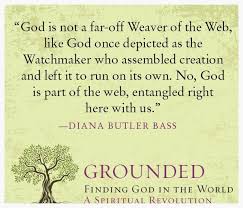
  • The book’s main insight: “God is the ground, the grounded, that which grounds us.” Diana wrote it to help others understand and join her on this beautiful journey.


Welcome to Our Blog!

As promised, I have started a blog for our Sophia thoughts, ideas, feelings, photos, impressions, and anything else we want to share before and after our monthly gatherings. I decided to call our circle of friends, “Sophia By The Sea” to honor our women’s retreats every year in Capistrano Beach and our beautiful environment on the coast of Southern California. Living in such close proximity to the Pacific Ocean has had a therapeutic effect and connected us to Beauty and to the Beloved in a myriad of ways. It seems only fitting that we are known by our outer, as well as inner, surroundings.

Our next meeting will be on Monday, May 14th, at Joyce’s house. Please RSVP to her emails regarding being present and food.

Our current book is Grounded by Diana Butler Bass. We have already read the Introduction together. Our discussion this month will be about Chapter 1: Dirt. I will post my notes about the Introduction in the next blog and post a few questions for you to ponder before we gather.

Grace and peace be on your path this day, and always. . .